OPSIAL
From traceability to decarbonization: OPSIAL's journey
Discover how OPSIAL, Descours & Cabaud's PPE brand, used Trace For Good to build supply chain traceability and lay the foundations for product decarbonization.


From traceability to decarbonization: OPSIAL's journey
Context and challenges
Founded 25 years ago, OPSIAL is the PPE brand of the Descours & Cabaud group, one of the leading industrial distributors in Europe. Dedicated to professionals, it covers the full range of protection needs, from head to toe, with a complete offering including safety footwear, protective clothing, gloves, helmets, and glasses. Distributed through the DEXIS, PROLIANS, and HYDRALIANS networks, OPSIAL has established itself in Europe and North America as a brand recognized for its expertise and the maturity of its market offering.
Amid a constantly evolving regulatory landscape (corporate duty of vigilance, Digital Product Passport, growing transparency demands from major accounts, etc.), OPSIAL wanted to structure its traceability approach in order to better manage the environmental impact of its products.
In 2024, the brand launched a traceability project with Trace For Good, with two objectives:
- Gain a better understanding of its supply chains and products;
- Collect the data needed to calculate the environmental footprint of its products, in support of eco-design and decarbonization plans.
Objectives of OPSIAL
For the first time, structure a traceability approach across a multi-category PPE catalog (clothing, footwear, gloves, glasses, etc.) with heterogeneous supply chains.
Collect and centralize reliable supplier data in a complex international environment.
Engage suppliers with widely varying levels of maturity to ensure structured information reporting.
Adapt traceability chains to the specific characteristics of each product category.
Run this project with a lean CSR team, requiring strong operational support.

The benefits of Trace for Good
A modular solution that adapts to the brand's use and evolves with its needs
An intuitive interface, making it easier for both in-house teams and suppliers to use
Centralized product data that acts as a true PLM system and reduces time-to-market for rolling out a traceability approach.
The Trace For Good solution
After reviewing the various solutions available on the market, OPSIAL chose Trace For Good for its ability to meet two essential needs: centralizing all data on a single platform, and benefiting from dedicated project support to manage data collection from suppliers.
The solution stood out for its flexibility and the quality of the partnership with the OPSIAL teams
The project relied on several key features and commitments:
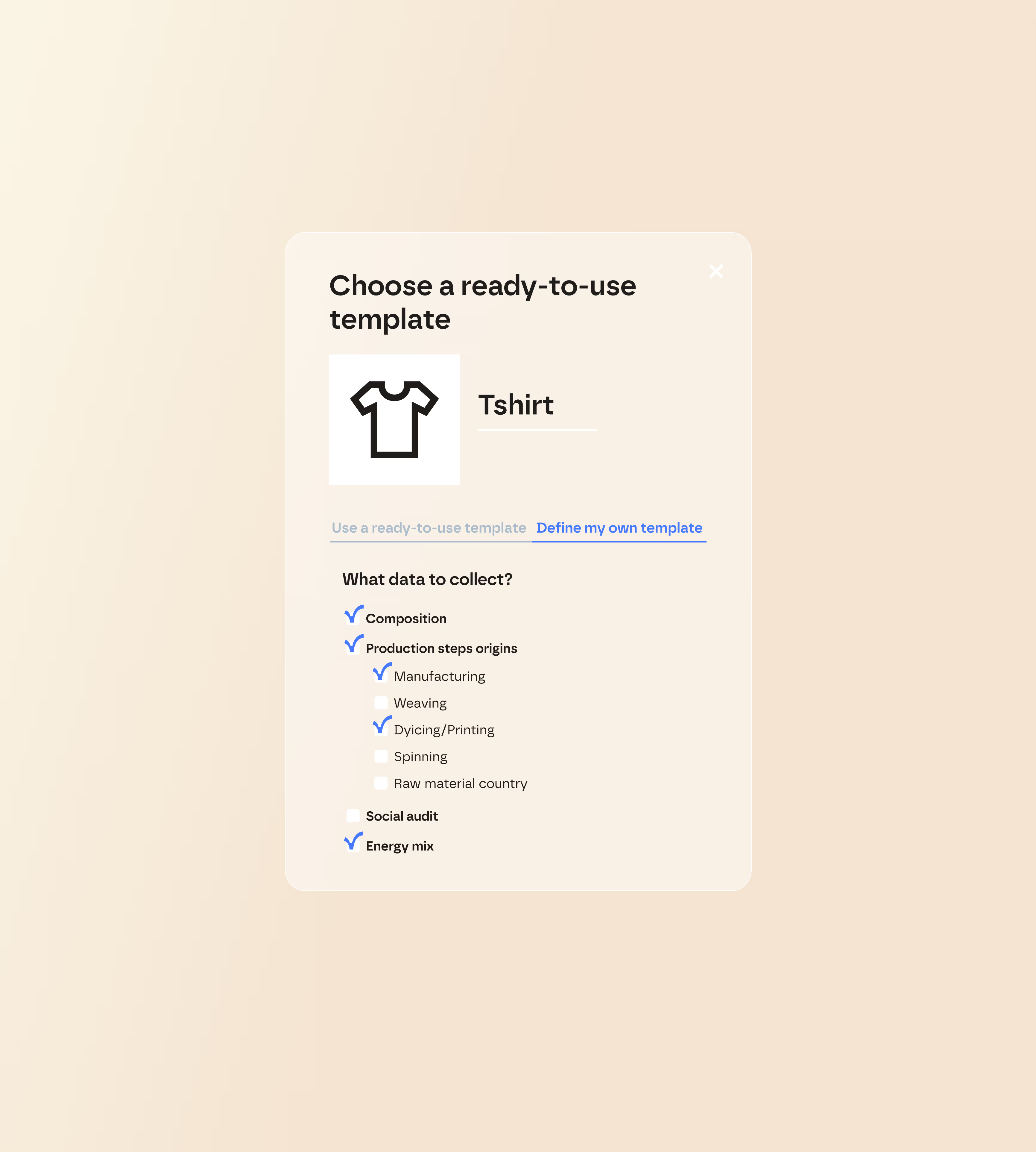
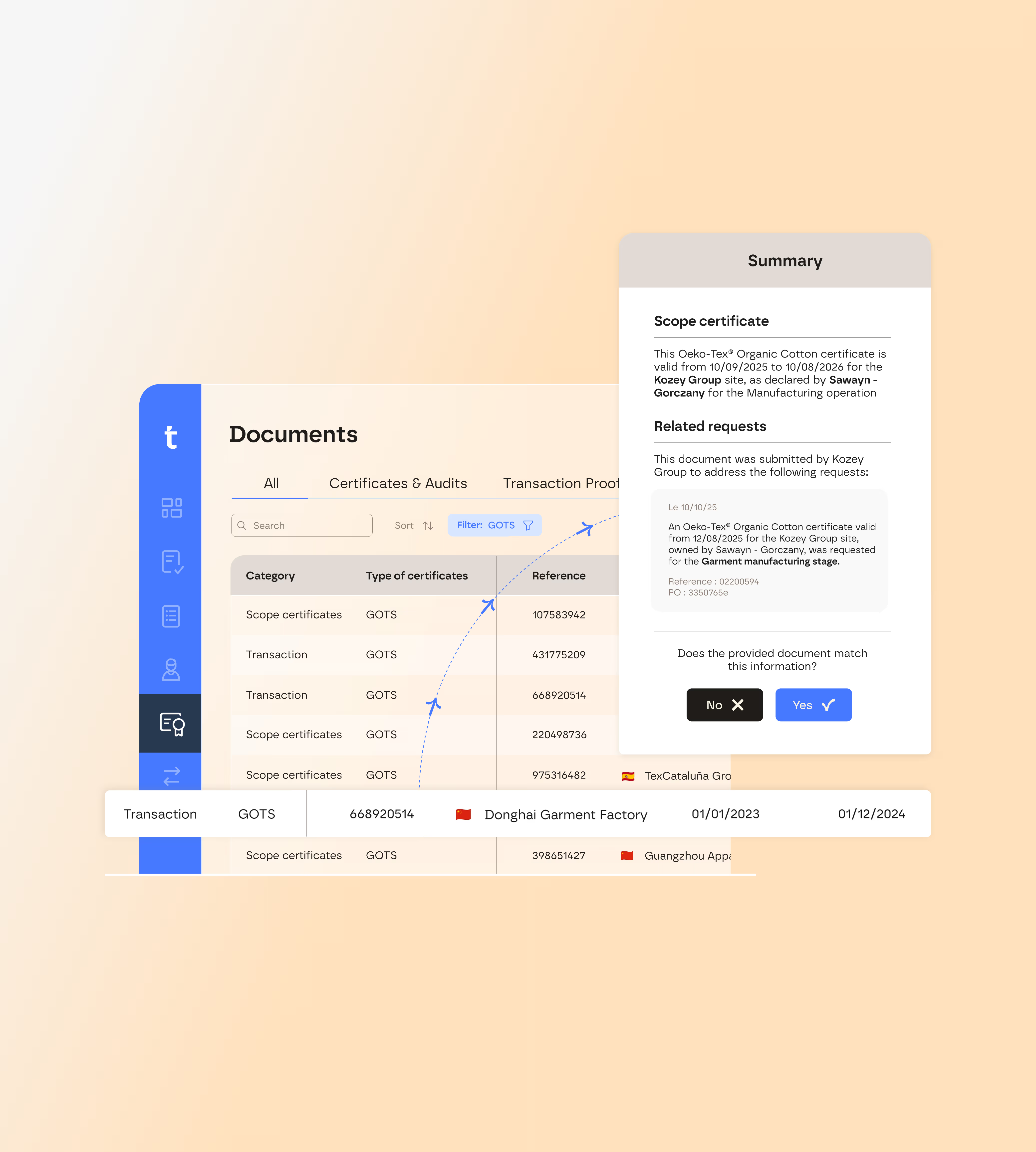
- Structured collection of product and supplier data to feed both traceability and environmental footprint calculations.
- Value chain mapping from raw material to finished product, product by product.
- Dedicated operational support with a Trace For Good project manager overseeing data collection, supplier follow-up, and the ongoing adaptation of the platform to OPSIAL's specific business needs.
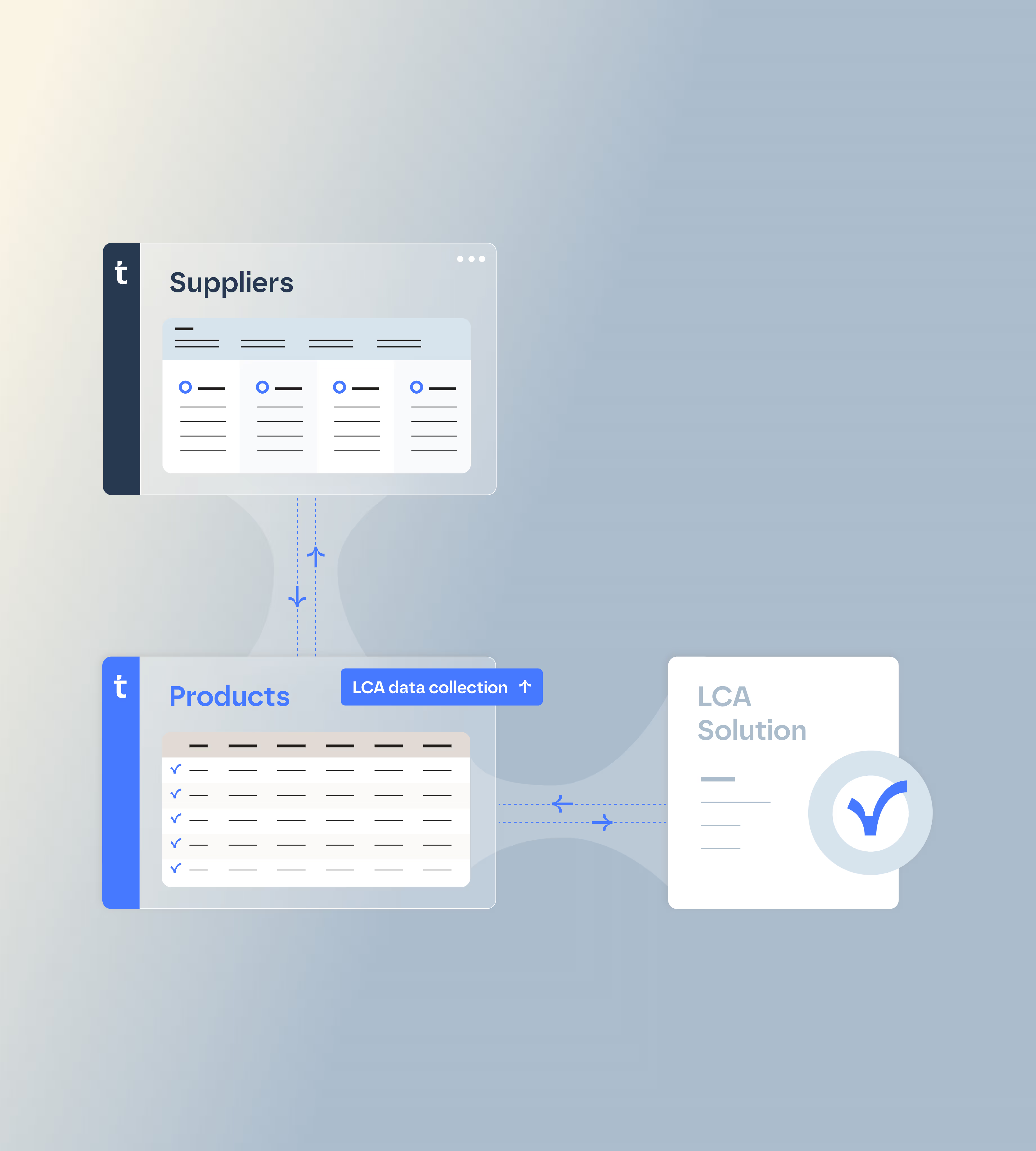
- Interoperability with Carbonfact, enabling the collected data to be used directly to measure the environmental footprint of products.
- Custom configuration to build traceability chains tailored to each product category: textile, footwear, gloves, and eyewear.
Résultats de la solution
Solution results
80
%
of products integrated into the platform within the first year
90
%
of the data needed for the carbon footprint calculation collected (2025 campaign)
80
%
of the elements required for a future DPP already available in the database
Suppliers mobilized and ready for rollout following an initial pilot
Key success factors
Structured project support: regular check-ins every two weeks with the CSM teams, and responsive operational teams during collection campaigns.
A collaborative, iterative approach: the tool continuously adapts to OPSIAL's specific business needs, particularly the diversity of traceability chains across product categories.
Strong commitment on both sides: the quality and reliability of the data are the result of close collaboration between the OPSIAL and Trace For Good teams.
A shared long-term vision: traceability is approached as ongoing, foundational work in support of product eco-design and decarbonization.
The favourite features of OPSIAL
Similar success stories
.webp)












%20(2).png)








Fill out the form below.