Detect and manage risks in your supply chain
As supply chains expand, risk management becomes more complex. With Trace For Good, move from reaction to anticipation and turn risk management into a proactive, ongoing process that protects your reputation, strengthens supplier trust, and keeps you audit-ready.
.avif)
Why take a proactive approach to risk?
Risks in the retail and textile industries are increasing fast.
What used to be driven by internal factors (product quality, supplier failures, compliance breaches) is now amplified by external factors such as new regulations, climate change, geopolitical instability and even media scandals.
These risks carry a significant cost for your brand, from fines to reputational harm. And as your supply chain expands, managing those risks becomes even more challenging.
Mitigating and preventing those threats rather than enduring their consequences has become essential. Building an internal risk scoring model tailored to your brand’s concerns and based on the ISO 31000 standard is a good first step.
But given the complexity and instability of today’s supply chains, the real challenge lies in anticipating those risks. This means detecting weak signals early, acting before disruptions occur, and ensuring business continuity in an-ever changing environment.
.avif)
How to ensure effective risk management?
Define your internal risk criteria
Identify the key dimensions that matter the most to your brand: quality, compliance, reputation, environmental, social, and more.
Build an internal scoring model: design a framework tailored to your business’ needs and objectives.
Set criticality levels for each criterion to make evaluations consistent and relevant.
Identify the relevant data to assess risk
Gather all relevant data from certifications, audits, product data, and more.
Check the availability, reliability, and accuracy of this data.
Organize your data to make it easy to use across your evaluation workflows.
Choose a platform that supports your scoring method
The platform should allow you to define your own criteria and adjust it over time.
It should be able to aggregate and consolidate data from multiple sources.
It should guarantee full traceability and transparency in how risk is calculated.
Set up smart alerts and interactive dashboards
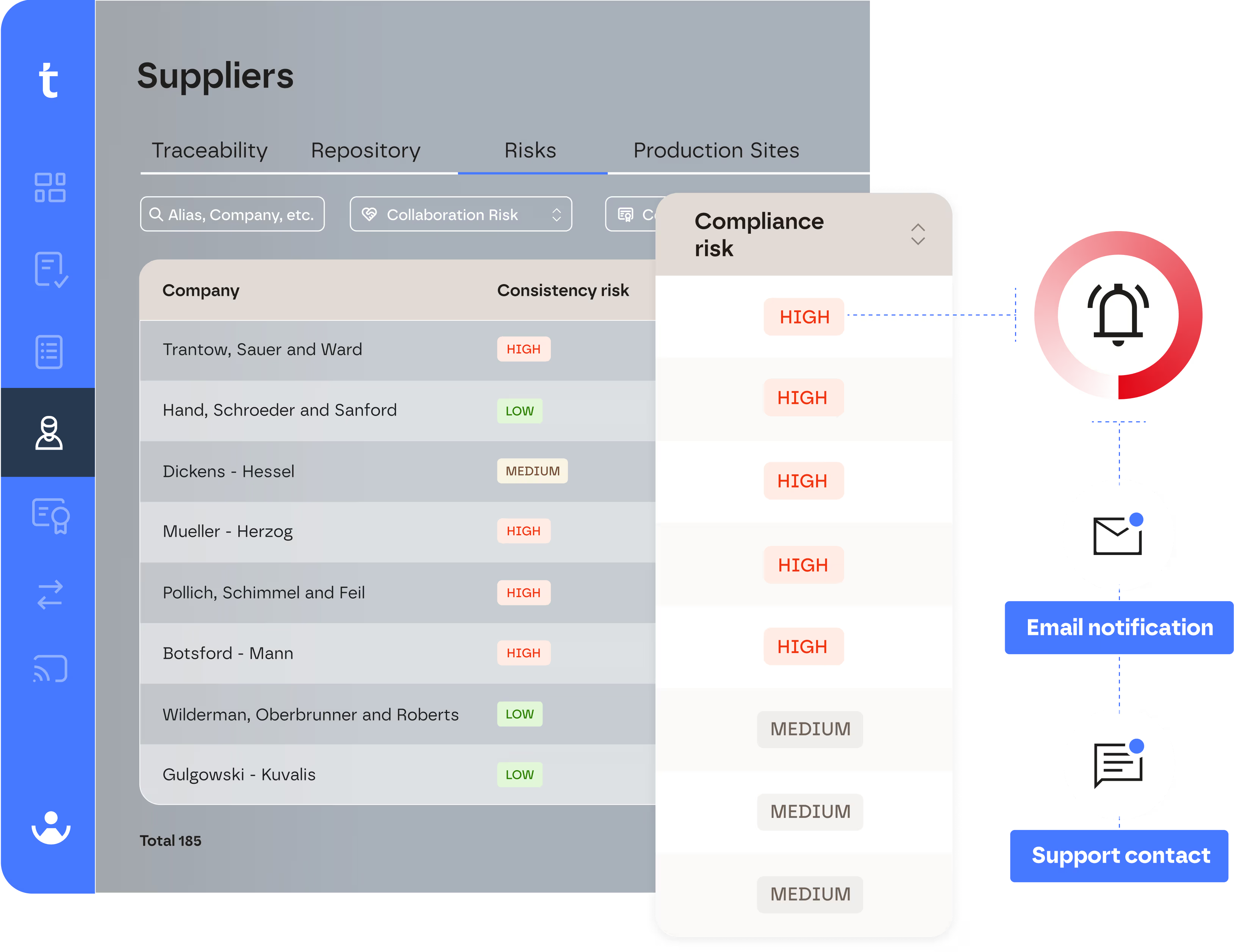
Get real-time alerts for issues such as anomalies, expired documents, or suppliers flagged as risky.
Track your key performance indicators through customizable dashboards.
Prioritise actions according to the level of severity and recurrence of the detected signals.
Manage and improve your framework over time
Keep track of changes and trends in supplier risk.
Regularly adjust your scoring model and alert thresholds.
Foster continuous improvement to strengthen your supply chain resilience.
Key features for risk management
Risk assessment engine
Analyse risks according to your own criteria and priorities
Map and manage your organizational risks with a platform built to fit your brand.
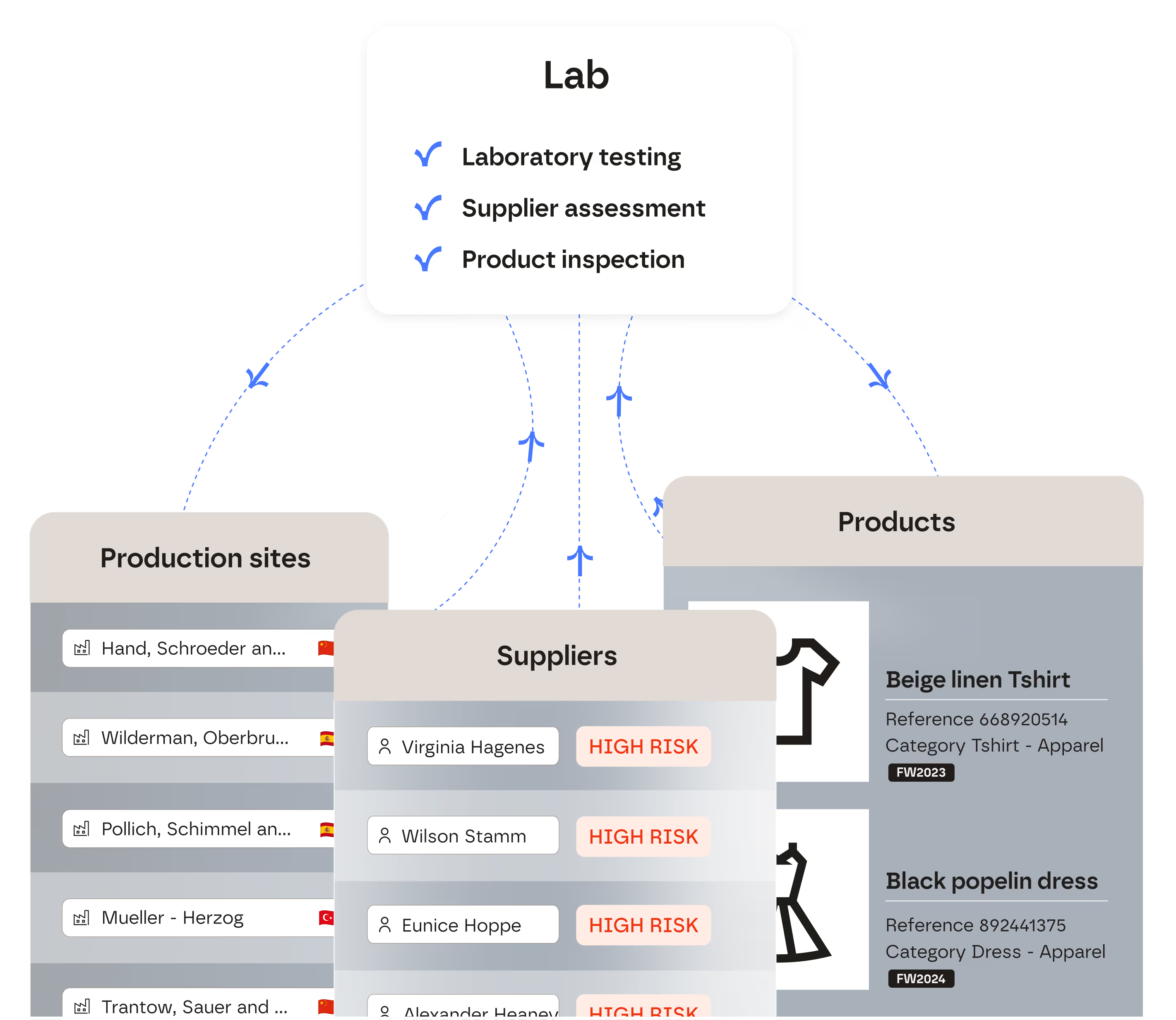
Integrate your scoring model, set your priorities, and track progress in real time, all while tracing supplier information through personalized badges.

Useful resources for risk management

.png)
.jpg)

Our partnerships
relatING TO RISK MANAGEMENT


FAQ
How can I build an effective risk-scoring model?
Once the various risks have been categorised as social, environmental, geopolitical, quality-related, business-related or collaboration-related, the next step is to prioritise them and assign a measurable value to each one.
An effective scoring model is built on three complementary pillars:
- Criteria that are adapted to your business activity: risks should fit your brand’s specific needs and challenges within the risk categories (see question 1).
- Reliable and accurate data: draw from trusted sources such as social audits, material certificates, product data, incident histories, and supplier declarations to ensure the credibility of your assessments.
- Realistic weighting: assign each risk a level of criticality that reflects its true impact on your brand, to help you prioritise actions and focus resources where they matter most.
The end goal is to mitigate your risks in the long run.
Trace For Good makes this possible by adding your scoring model directly to your platform. This allows you to make decisions based on your priorities and supply chain evolutions.
How often should supplier risk be reassessed?
Ideally, a full evaluation should be carried out once or twice a year. However, some indicators (like certificate validity, audit results or compliance alerts) need to be consistently monitored.
With dashboards and alerts, Trace For Good helps you easily keep track of these updates in real time.
What is the difference between reactive and proactive approach to risk management?
In a reactive approach, you react only after a problem has occurred.
On the other hand, the proactive approach, supported by Trace For Good, focuses on detecting early warning signs and taking preventive actions before risks impact your operations.
What is Trace For Good's methodology for risk assessment?
At Trace For Good, we believe risk cannot be standardised: every brand has its own thresholds, priorities and definitions of what constitutes risk.
The platform therefore allows you to configure your own analysis grid with a very high level of granularity and to define your own criteria. For example, identifying suppliers in specific geographical areas, with low social audit scores, low completion rates, or recurring missing documents.
You decide what qualifies as a risk, and the platform notifies you so you can act in time or switch to another production partner.
Where should I start when evaluating risks across my supply chain?
Start by identifying the types of risks that are the most relevant to your brand. In the textile industry, risks generally fall into six categories:
- Social risk: reflects how well a supplier meets social compliance standards based on audit validity and performance score.
- Collaboration risk: evaluates how effectively a supplier shares traceability information.
- Business risks: assesses your brand’s dependence on key suppliers across the supply chain.
- Quality risks: relates to product compliance, material composition, and the history of quality-related incidents.
- Environmental risks: evaluates the production’s impact on natural resources and emissions.
- Geopolitical risks: examines exposure linked to supplier location, regional tensions, and local regulatory constraints.
Next, build an internal scoring model, weighting these criteria according to your priorities and each supplier’s criticality level.