Communicate your CSR efforts to your clients
With Trace For Good, turn your CSR commitments into tangible, verifiable and shareable proof. Secure your claims, structure your messages, and promote your actions without risking greenwashing.
.avif)
Why promote your CSR efforts to your clients?
Today, many brands invest in the quality, durability and traceability of their products. Yet these efforts often remain invisible to consumers.
Communicating your CSR commitments is precisely what allows your customers, as well as your internal teams, to understand the real value of the work you’re doing.
Sharing your actions clearly and responsibly brings several benefits:
- Your progress becomes visible: consumers can finally distinguish brands that rely on solid evidence from those that make vague or unsubstantiated claims.
- Your initiatives gain legitimacy: internally and externally, they are recognised as genuine drivers of performance, engagement and innovation.
- You build trust: controlled communication, grounded in reliable data, strengthens the confidence customers and partners place in your brand.
You turn compliance into a competitive advantage: as the regulatory landscape evolves (UCPD, Empowering Consumers for the Green Transition), brands that can prove what they do, and how they do it, take the lead.
For years, the absence of a shared methodology held brands back. Today, the framework is clearer: the rules are explicit, and so are the expectations around evidence. It’s no longer just about avoiding greenwashing. Brands that communicate responsibly, backed by verified data, gain a tangible advantage: credibility, differentiation, trust and recognition.
Communicating your CSR commitments is not green marketing.
It’s giving visibility to your work, value to your evidence, and meaning to your approach.
.avif)
How to promote your CSR efforts?
Audit your current initiatives
List all existing actions: certificates, product tests, traceability efforts, eco-design projects, and more.
Assess their scope and reliability: identify which initiatives are active, which require formalisation, and which need to be strengthened.
Map your internal resources: tools already in use, teams involved, supplier maturity. This overview allows you to build on what already exists rather than starting from scratch.
Distinguish legal requirements from voluntary commitments
Separate what is required by law (AGEC Act, EUDR, due diligence, etc.) from what stems from your own voluntary commitments.
Be transparent about the distinction: clarifying this boundary reinforces the credibility of your approach and shows that your actions go beyond basic compliance.
Substantiate every claim with documented evidence
Gather all available documentation: supplier certificates, safety tests, social or environmental audits, lifecycle analyses.
Centralise and structure this information in a shared space accessible to all relevant teams.
Ensure full traceability for every claim: each public statement must be backed by a verifiable, dated document.
Align your internal stakeholders
Involve all relevant departments: legal, CSR, product, quality, and communication teams.
Set up a clear validation workflow before any external communication.
Build a shared evidence-based culture: train your teams on regulatory requirements and the risks of unsubstantiated claims.
Give consumers the right information, in the right place
Include in your product passport all specific and verifiable information (composition, traceability, certifications, tests, audits, etc.). These data points strengthen consumer trust in your brand.
Communicate your global strategy (climate roadmap, long-term commitments, responsible sourcing policies, etc.) through your CSR reports and corporate channels.
Update this information regularly to maintain consistency and reliability across all your communication touchpoints.
Key features for customer communication
Communication studio
Create detailed product profiles
Update product pages with transparent, verifiable information: certifications, tests, traceability, repairability and environmental commitments. With Trace For Good, every product comes with a detailed profile that strengthens communication and builds stakeholder trust.

Centralised document hub
Quickly access your key supporting documents
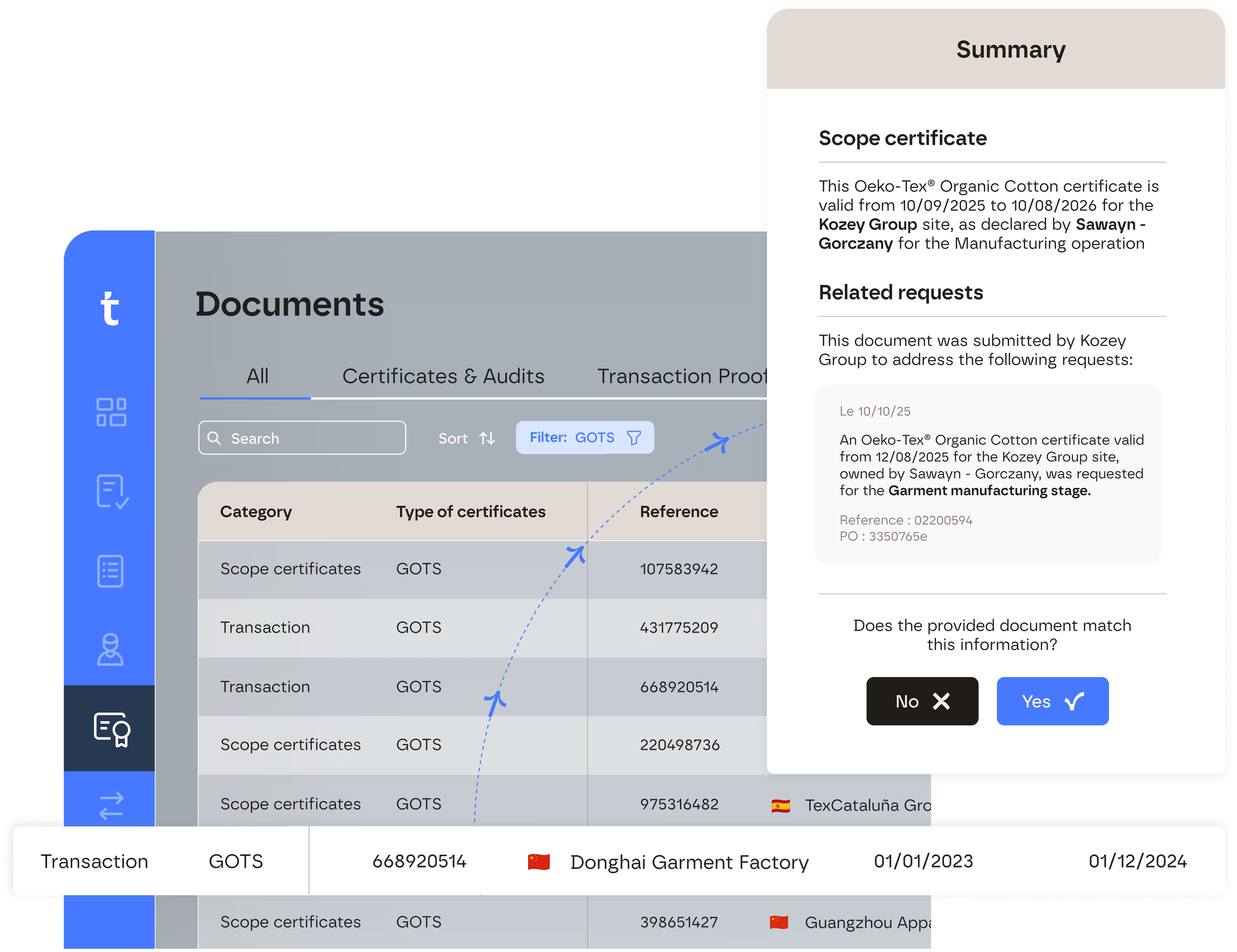
Trace For Good centralises all essential documentation(supplier certificates, audits, internal reports, CSR programs) in a single, secure location. The platform streamlines regulatory compliance and ensures consistent, reliable communication.
Useful resources for customer communication
.avif)


.jpg)

Our partnerships
related to customer communication




FAQ
Are product passports mandatory?
Not yet. But EU regulations are clearly moving toward greater product-level transparency. Deploying structured, reliable product passports now prepares your brand for upcoming requirements (DPP, Empowering Consumers, UCPD, etc.).
Can my product passports be customised?
Yes. Trace For Good allows you to tailor your digital passports to your visual identity, domain, business needs, use cases and internal standards.
How can I communicate more while avoiding greenwashing?
By relying only on reliable, documented and verifiable data. Trace For Good centralises all your evidence (certificates, tests, audits, etc.) and helps you craft factual messages aligned with the requirements of the UCPD and the Empowering Consumers for the Green Transition directive.
How can I share my sustainability commitments and actions with my customers?
There are two ways to communicate your sustainability commitments, depending on whether the information relates to the product itself or to your company more broadly.
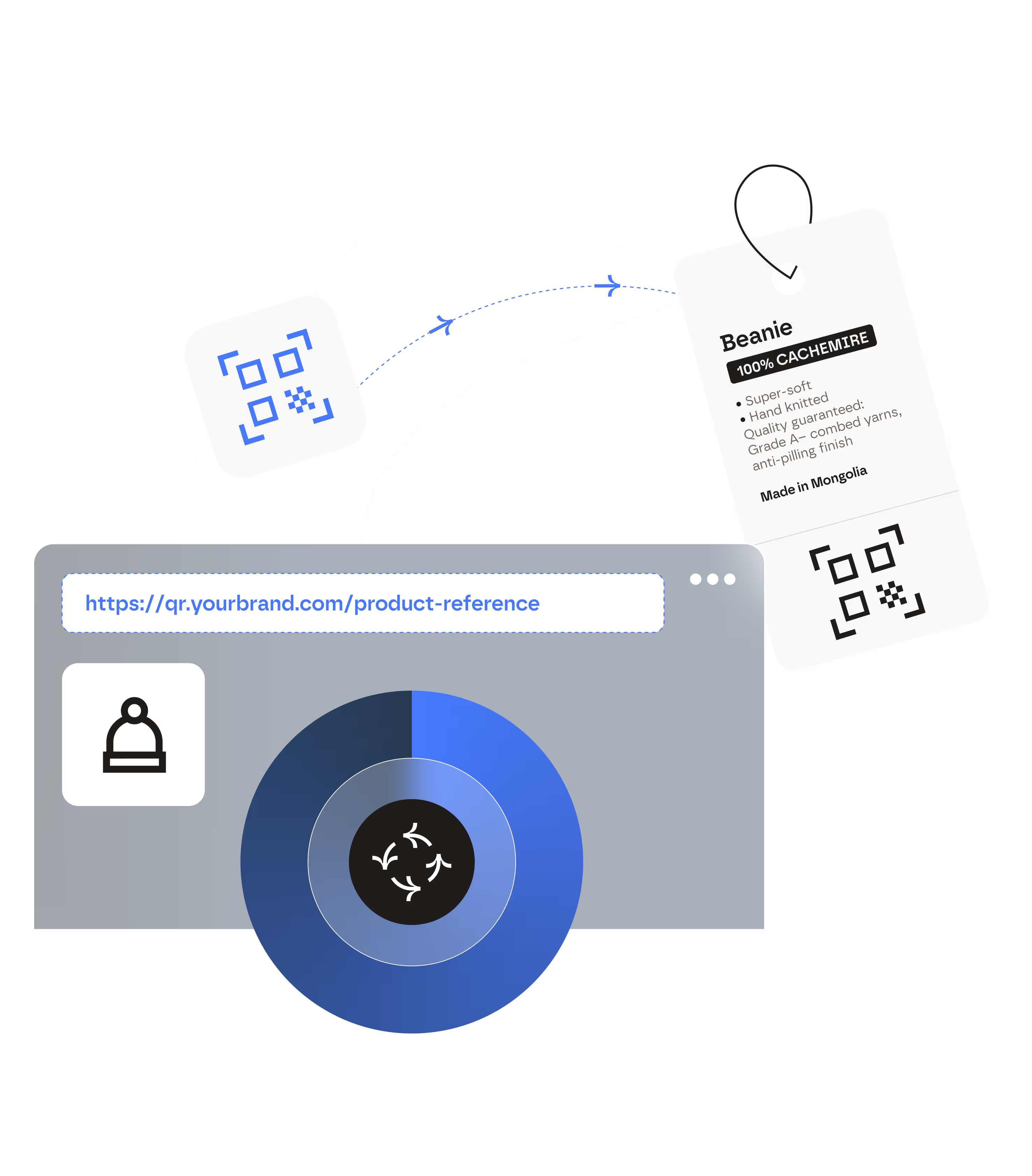
On one hand, product-specific commitments (such as traceability, material composition, environmental impact or certifications) must be communicated at the product level. With Trace For Good, you can integrate this information into a dedicated product passport, accessible directly from your product page or via a QR code, ensuring transparent, verifiable and always up-to-date information for your consumers.
On the other hand, corporate-level commitments (climate strategy, 2050 targets, global CSR initiatives or governance) should be communicated at the corporate level, for instance in your sustainability report, on a dedicated page on your website or through your corporate communications.
The key is to avoid placing corporate information at the product level when it cannot be attributed to that specific product, in order to remain compliant and prevent any risk of misleading claims.
How does Trace For Good help me communicate safely?
The platform secures your claims by relying on verified data, centralised documentation and internal validation workflows that prevent vague or unsubstantiated statements. Every message can be traced back to a verifiable document.
What’s the purpose of predictive URLs?
They allow you to generate your links and QR codes even before your traceability data is finalised. This is ideal for managing printing deadlines, working in white-label mode and keeping full control over the hosting of your product pages.