Digital Product Passport (DPP)
The digital product passport gives each product a unique digital identity, making it possible to trace and document the product’s entire life cycle from design and manufacturing to end of life.
To help you prepare for the DPP, Trace For Good centralizes, structures, and secures your data, enabling you to generate a customized and compliant product passport.
ESPR delegated acts for apparel and footwear expected in 2027

Understanding the DPP regulatory framework
The Digital Product Passport (DPP) will be a unique digital record for every product placed on the European market.
It will provide access to standardized data on a product’s composition, traceability, environmental performance, and durability.
The goal of this initiative is to enhance transparency throughout the product’s entire life cycle and ensure that information remains accessible to all.
The Trace For Good platform helps you effectively prepare for the DPP by:
- Centralizing and structuring your product data according to the formats that will be defined in the delegated acts,
- Identifying missing data and collecting it automatically from your suppliers,
- Keeping product passport versions up to date as they evolve
- Publishing your products’ digital passports directly on your e-commerce website,
- Automatically transmitting your DPP data to the relevant authorities’ portals and preparing you for audits.
This way, you can publish your products’ digital passports with complete confidence.
What is the purpose of the Digital Product Passport?
The Digital Product Passport has several key objectives:
- Ensuring access to reliable product information across the entire life cycle,
- Promoting circular economy principles like repairability and recyclability
- Building consumer trust,
- Ensuring greater transparency in environmental claims
- Preventing misleading marketing practices.
Which companies are affected by the DPP?
The Digital Product Passport will soon be mandatory for all companies selling products in the categories covered by the regulation on the European market (ESPR).
The textile sector will be the first affected by the regulation, with delegated acts expected around 2026. Hence, fashion brands should start preparing now.
The Trace For Good platform automatically identifies textile products in your catalog that fall under the upcoming Digital Product Passport (DPP) requirements.
In just one click, you can:
- Filter eligible products based on regulatory criteria,
- Launch targeted collection campaigns to fill in missing data,
- Track progress and data completeness in real time.
Stop manual sorting, supplier follow-ups, and spreadsheet management: everything required for compliance is already here.
What products will be affected by the DPP?
The priority products are as follows:
- Textiles and apparel
- Batteries
- Furniture
- Tyres
- Mattresses
- Energy-related products
- ICT and electronic products
What data will your Digital Product Passport include?
The exact content will vary depending on the product category and will be defined by the 2027 ESPR delegated acts for apparel and footwear. It should include:
- Product details (name, reference, unique ID),
- Composition (materials, substances),
- Origin and manufacturing process,
- Sustainable indicators (repairability, recyclability),
- Usage and care instructions,
- Compliance documentation (certificates, declarations).

Digital Product Passport: what changes for your brand
You must structure your product data properly
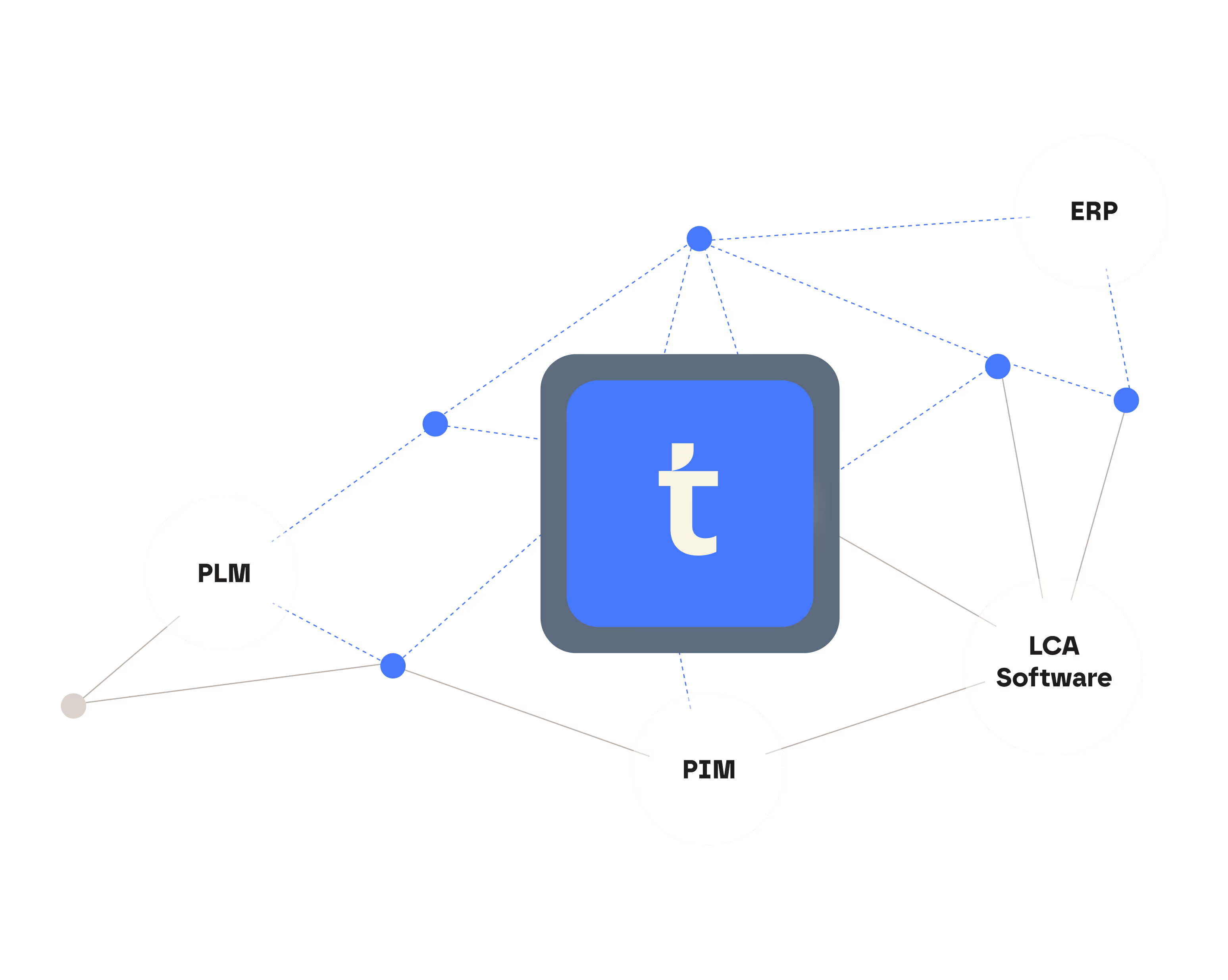
The DPP requires brands to organise all product information in their internal systems (PLM, PIM, ERP) in a complete, consistent and interoperable way. Fragmented data will make it harder to retrieve the right information quickly and prevent the process from scaling.
You must trace all necessary information about your products
Materials, transformations, suppliers, certifications, durability, repairability and environmental impact must all be documented and verifiable to meet future DPP expectations.
You must generate product passports at scale
Every item placed on the EU market will need its own digital product passport, published online and accessible to consumers and authorities across your website and digital channels.
Maîtriser vos produits,engagez vos fournisseurs,informez vos clients.
Prepare for the Digital Product Passport with Trace For Good
Import all your product and supplier data into the platform
Automatically collect missing information from your suppliers
Customize your product passports to fit your brand
Seamlessly share data with official portals
Publish your product passport directly on your e-commerce website
Key featuresfor the Digital Product Passport
Communication studio
Create a product passport tailored to your brand’s image
Build a custom product passport fully aligned with upcoming DPP requirements.
Traceability, composition, compliance, environmental impact: everything is integrated and ready to be shared across your channels, whether digital (website, QR code) or physical (labels, packaging, etc.).
Interoperable, customizable, and ready to activate in just a few clicks.

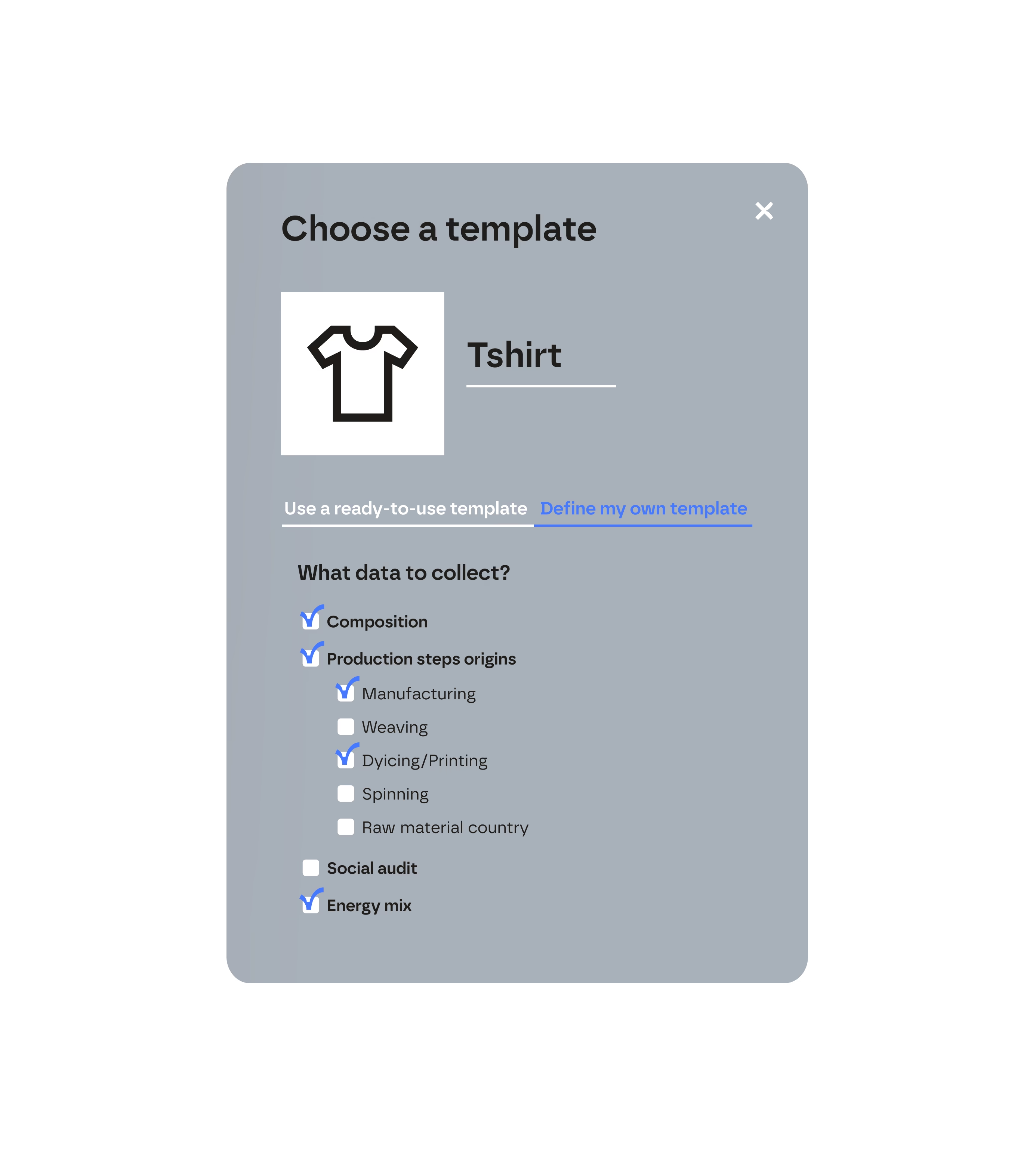
Standard or customized collection models
Get ahead of DPP requirements, starting with your own suppliers
Automatically collect all the information needed to build your Digital Product Passports directly from your suppliers.
The collection model is built into your traceability platform and updates you in real time whenever regulations change.
Useful ressourcesfor the Digital Product Passport




.jpg)






Our collaborations
relating to DPP preparation



FAQ
Can I prepare for the DPP before the delegated acts are adopted?
Yes, and early preparation is strongly advised.
Although the delegated acts have yet to be published, the general framework and categories for the Digital Product Passport are already defined. Companies can begin preparation by:
- Identifying existing data within your internal databases
- Identifying gaps and structuring databases to integrate additional data fields
- Initiating supplier data collection for core information likely to be required, such as:
- Supply chain traceability (production locations and process stages)
- Durability and repairability metrics
- Sustainable attributes (materials, recyclability, recycled content, carbon footprint)
- Compliance and certification data
- Progressively integrating this information into product documentation in alignment with the future DPP format
Early action will allow you to deploy complete compliant product passports once delegated acts are finalized.
Is the Digital Product Passport (DPP) already mandatory?
No. The regulatory framework has been established with the adoption of Regulation (EU) 2023/1542 on Ecodesign for Sustainable Products (ESPR), but will depend on the delegated acts specific to each product category.
For the textile sector, implementation is expected to begin at the end of 2027. However, now is the time to start preparing the necessary data ahead of enforcement.
What are the consequences if I don’t prepare for the DPP?
A lack of preparation could lead to:
- Products being banned from the EU market if they’re not compliant
- Penalties for missing or inaccurate data
- Loss of competitiveness compared to brands that have already structured their product data
What information will the DPP include?
The content will vary depending on the product category but will include at least:
- Product identity: name, reference, unique identifier
- Composition: materials, substances of concern
- Traceability: origin, transformation sites, suppliers
- Environmental performance: durability, repairability, circularity
- Regulatory compliance: certificates, declarations
- Instructions: use, care, and end-of-life information
Each data will need to be structured, auditable, interoperable, and updated in real time.
What is the legal basis for the DPP?
The Digital Product Passport is based on Regulation (EU) 2023/1542 on Ecodesign for Sustainable Products (ESPR).
This regulation aims to strengthen the durability, circularity, and traceability of products placed on the European market. It introduces the obligation to create a digital passport for certain product categories, with specific requirements to be defined in delegated acts currently under development.
What is the timeline for implementing the Digital Product Passport?
Key milestones include:
- Mid-2026: first delegated acts to be adopted (including textiles)
- July 2026: the European DPP register goes live
- End of 2027: implementation begins for the first product categories, including textiles.
Who will have access to the Digital Product Passport?
Access will be depending on user profiles:
- Consumers will be able to view a simplified version (via QR code, product sheet, etc.)
- Market surveillance authorities will have full access
- Distributors, repairers, recyclers, and logistics operators will have partial access, adapted to their role
- Brands will retain full control on updating and distributing their data
Will the content of the Digital Product Passport be harmonized?
Yes. Harmonization is one of the key conditions for implementing the Digital Product Passport.
CEN-CENELEC is currently working on defining common standards to ensure data is:
- Machine-readable
- Interoperable across systems
- Secure and properly versioned
- Accessible to stakeholders with differentiated levels of access
Will the environmental cost be included in the textile DPP?
In France, environmental labeling using the Ecobalyse method is currently being implemented and may later be included in the textile DPP.
This will ultimately depend on upcoming national and EU decisions defined in delegated acts.