Build your intelligence reporting
With Trace For Good, turn your traceability data into clear, actionable insights. Build dashboards tailored to your goals and manage every step of your sustainability journey with reliable data, updated in real time.
.avif)
Why create a reporting framework for traceability?
Structuring custom reporting isn’t just about visualizing your data: it helps you manage your operations, reduce risks, and demonstrate the value created by your traceability efforts.
Specifically, this helps you to:
- Track the progress of your traceability campaigns
You can monitor progress in real time, identify bottlenecks, and spot inactive suppliers before they slow down your operations. This keeps you one step ahead and helps you optimize the management of each campaign. - Manage supplier risk
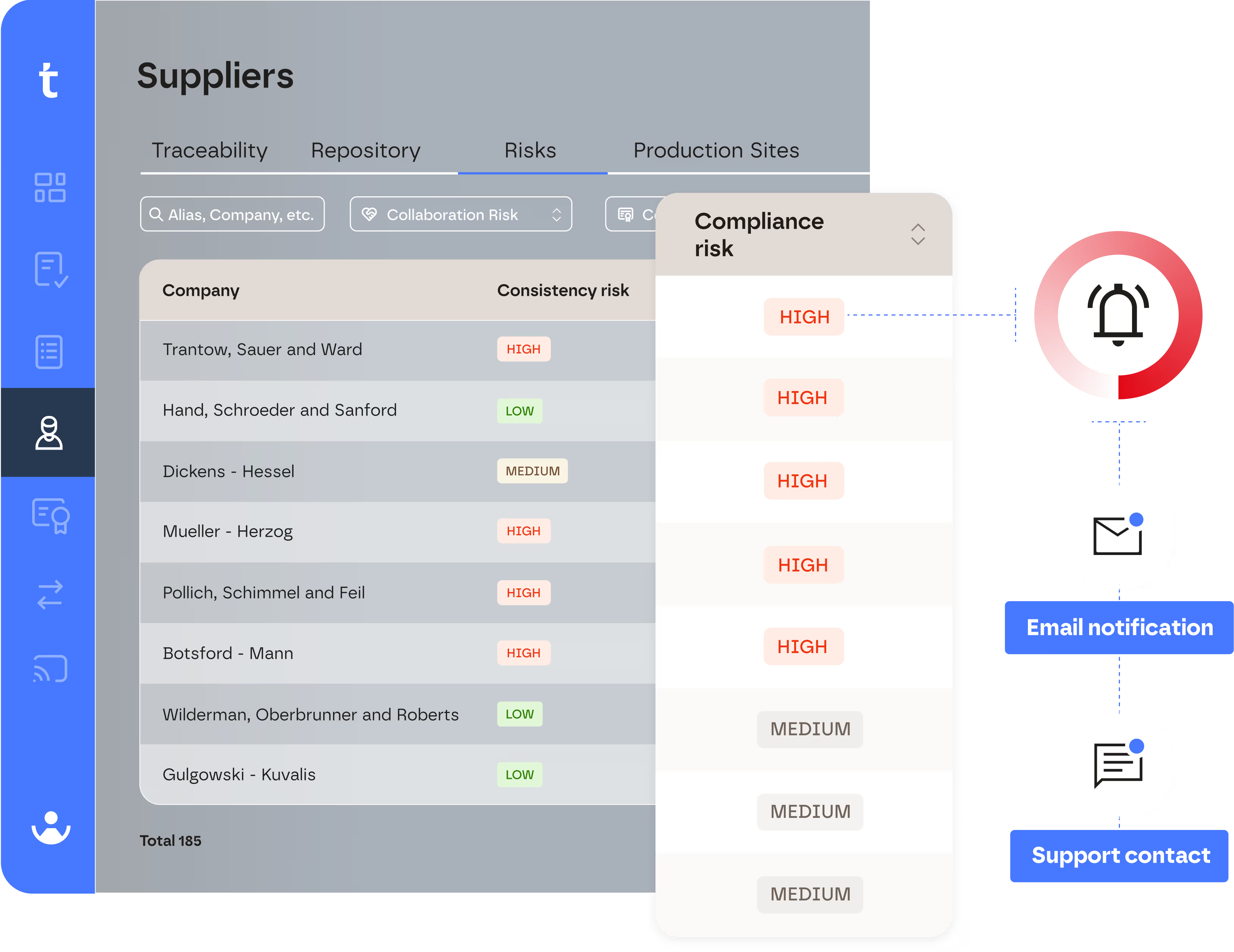
By structuring reporting around your own criteria, you can quickly detect at-risk suppliers: missing evidence, inconsistencies, low response rates, critical dependencies, and more. This lets you prioritize action plans and proactively secure your supply chain. - Prepare your non-financial reporting
Dedicated reporting gives you access to verified, structured, ready-to-use data to meet your obligations under CSRD, due diligence requirements, or internal CSR reporting. You avoid manual rework and save valuable time when consolidating ESG indicators. - Engage your teams with strong and accurate KPIs
Sharing your reports helps demonstrate the tangible impact of your traceability strategy through metrics that matter to leadership: time saved for teams, savings generated through eco-modulations, faster compliance, and much more. Traceability becomes a true performance lever.
.avif)
How to make your CSR reporting more reliable?
Centralize all your product and supplier data
Start by bringing your compliance, CSR, and operational data together in a single platform that standardizes all your information.
This connects teams and data sources around one common, reliable reference.
It also helps eliminate manual rework and time-consuming consolidation.
Strengthen your reporting with traceability
Capture insights from across your full supply chain.
Rely on information updated directly by your production partners.
Increase accuracy with data collected at the level of granularity you choose (Purchase Order, SKU, product reference).
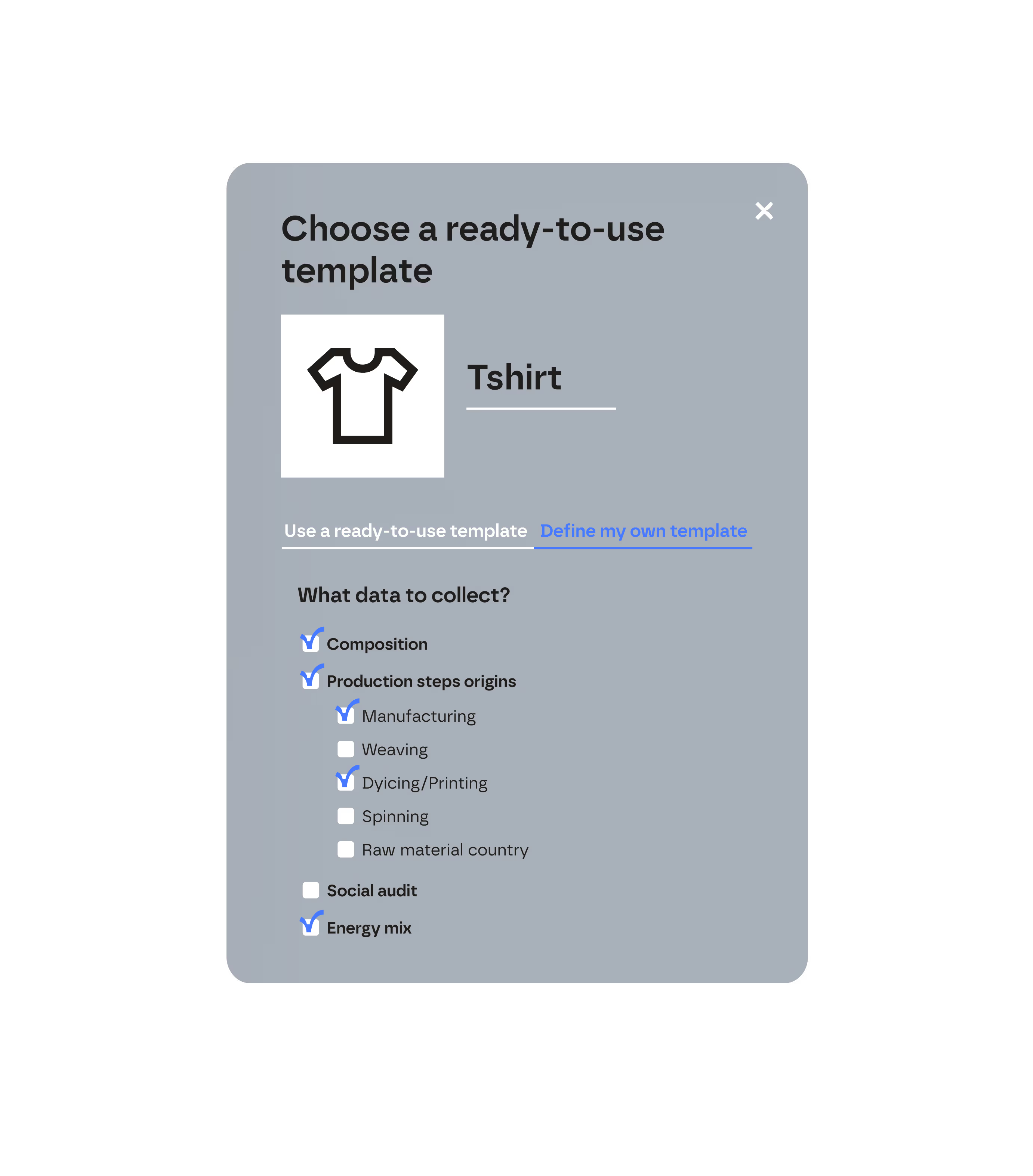
Rely on pre-existing or custom templates
Use the preconfigured formats available in your traceability platform: AGEC, EUDR, Environmental labeling, and more.
You can also create data templates tailored to your KPIs and specific needs.
Flexible exports and seamless integrations
Generate reports instantly for authorities, auditors, or internal teams.
Export your data in the formats that fit your tools and processes.
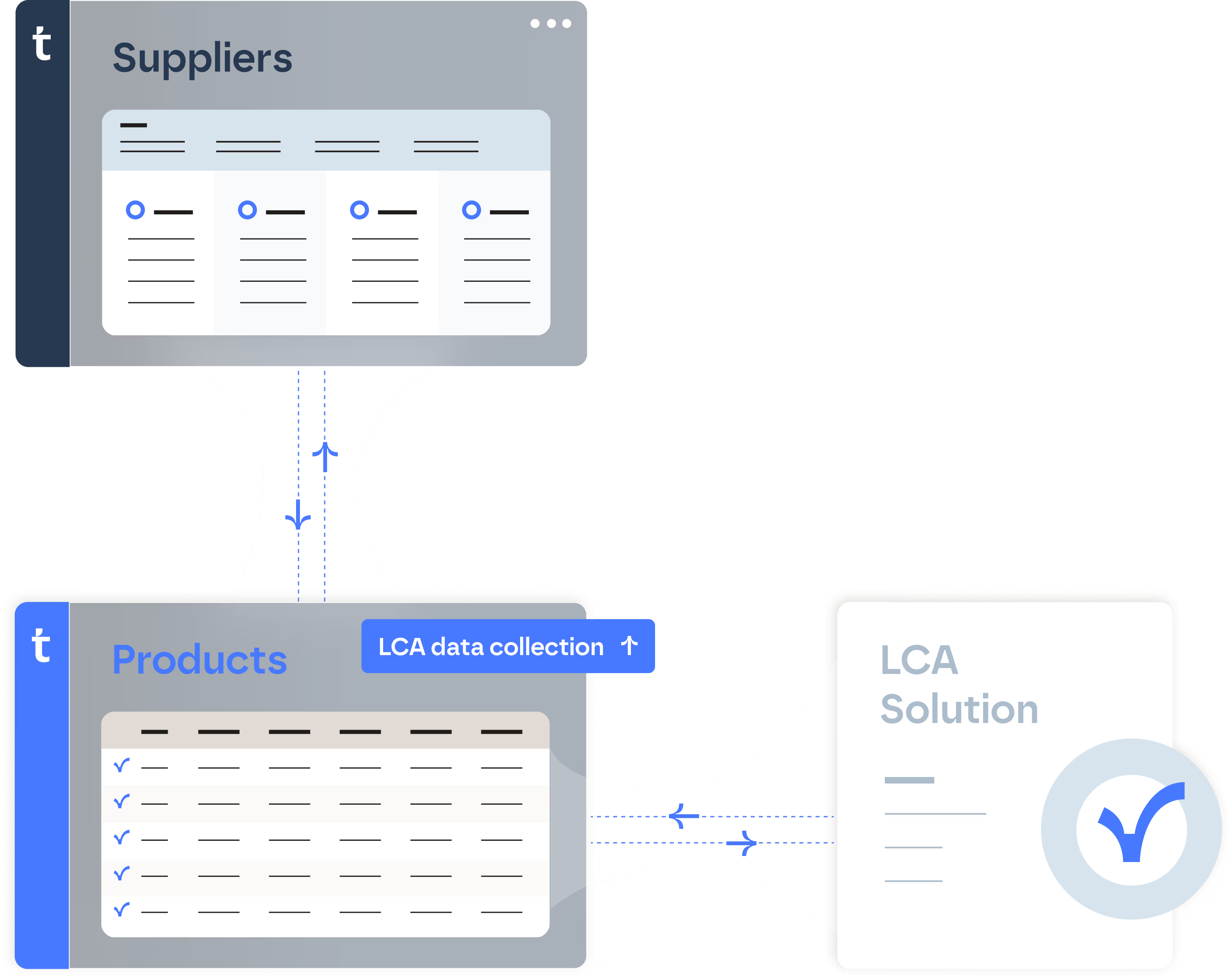
Sync directly with your internal or third-party tools (LCA software and more) through APIs, without manual work.
Continuously monitor data reliability
Detect inconsistencies, missing data, and expiring documents automatically.
Fix gaps before they impact your business.
Drive continuous improvement by strengthening data quality over time.
Key features for advanced reporting
Scope 3 data ready for LCA
Collect detailed indicators
Trace For Good helps you gather key metrics to identify your environmental impact at both product and factory level (emissions, water consumption, material origin, and more). Your data is complete, accurate, and can be exported to any LCA engine (Life Cycle Assessment). This gives you reliable scores and helps you improve your performance over time.
Useful resources for advanced reporting



.png)
.png)

Our partnerships
relating to advanced reporting


%20(2).png)
FAQ
Are the reports customizable to my needs?
Yes. You choose the data, filters, views, and KPIs you want to track. The teams you select can create their own dashboards at every level, from operational to executive.
Can these reports be integrated into our internal tools?
Yes. You can export your dashboards instantly or connect them to your BI tools, LCA software, or internal platforms through Trace For Good’s APIs.
How does traceability reporting make my day-to-day easier?
Setting up reporting tailored to your needs helps you:
- Track supplier response rates
- Anticipate bottlenecks in your supply chain
- Monitor the quality of incoming data
- Save time when preparing internal or regulatory analyses
How do you ensure data reliability?
The platform automatically checks for errors, inconsistencies, duplicates, expired evidence, and missing data. You receive the relevant alerts immediately, helping you prevent gaps or inaccuracies in your analyses.
What can I track using Trace For Good’s platform reports?
You can track campaign completion, received evidence, supplier risks (social, quality, materials, environmental, and more), product compliance, certificates, supplier response times, and any performance indicator linked to your operations.
Why set up traceability reporting?
Traceability reporting brings structure and clarity to your data. It allows you to:
- Get a clear, centralized view of your product and supplier data
- Track the progress of your traceability campaigns
- Identify and manage supplier-related risks
- Make decisions based on reliable, updated information