The EUDR
From 30 December 2026, the EUDR requires companies importing, placing, making available or exporting covered products in the EU to prove they are deforestation-free and legally produced.
With Trace For Good, manage your EUDR obligations end to end in one workspace, from supply-chain data collection to regulatory declaration.
30 June 2027: Micro & small companies
.avif)
Understanding the EUDR
The core legal act underpinning the EUDR is Regulation (EU) 2023/1115 on deforestation-free products, adopted in June 2023 as part of the EU's broader environmental and climate agenda.
The Regulation establishes strict rules prohibiting the placing, making available, or export of certain commodities and derived products unless they are deforestation-free, legally produced, and covered by a due diligence statement.
It also introduces enhanced traceability requirements, including production-location information and plot-level geolocation where required, and replaces the earlier EU Timber Regulation (EUTR) by significantly expanding both the scope of commodities and the depth of compliance obligations.
Trace For Good helps you turn supply chain data into structured, traceable evidence for your EUDR obligations.
- Centralise product, supplier and material data in one workspace
- Identify missing information and documents across your supply chain
- Trace products and materials back to their production plots, with the required geolocation data and compliance documents
- Automatically generate structured evidence and due diligence statements from the data collected
- Keep each statement and its supporting evidence linked, accessible and ready for audit
What are the objectives of the EUDR?
The EUDR aims to significantly reduce the European Union's contribution to global deforestation and forest degradation.
- The products placed on the EU market must be deforestation-free and degradation-free.
- They must be legal, meaning produced in accordance with the relevant legislation of the country of harvest.
- They must be accompanied by a due diligence statement (DDS).
Following the simplification of the EUDR in 2025, the objectives remain the same. However, simplified procedures now apply to products sourced exclusively from low-risk countries and to eligible micro and small primary operators.
Which companies are affected by the EUDR?
The Regulation applies to companies involved in placing or trading covered products in the European Union.
Operators are companies that import, manufacture, or export products covered by the regulation. They are generally the first entity to place products on the EU market or export them from the EU, and they bear the full due diligence obligations.
Traders are companies that only sell covered products within the EU. They make products available further down the supply chain and must maintain traceability. Their obligations may be lighter when they are micro or small enterprises.
A company may have different responsibilities depending on its role in the supply chain and the products it handles.
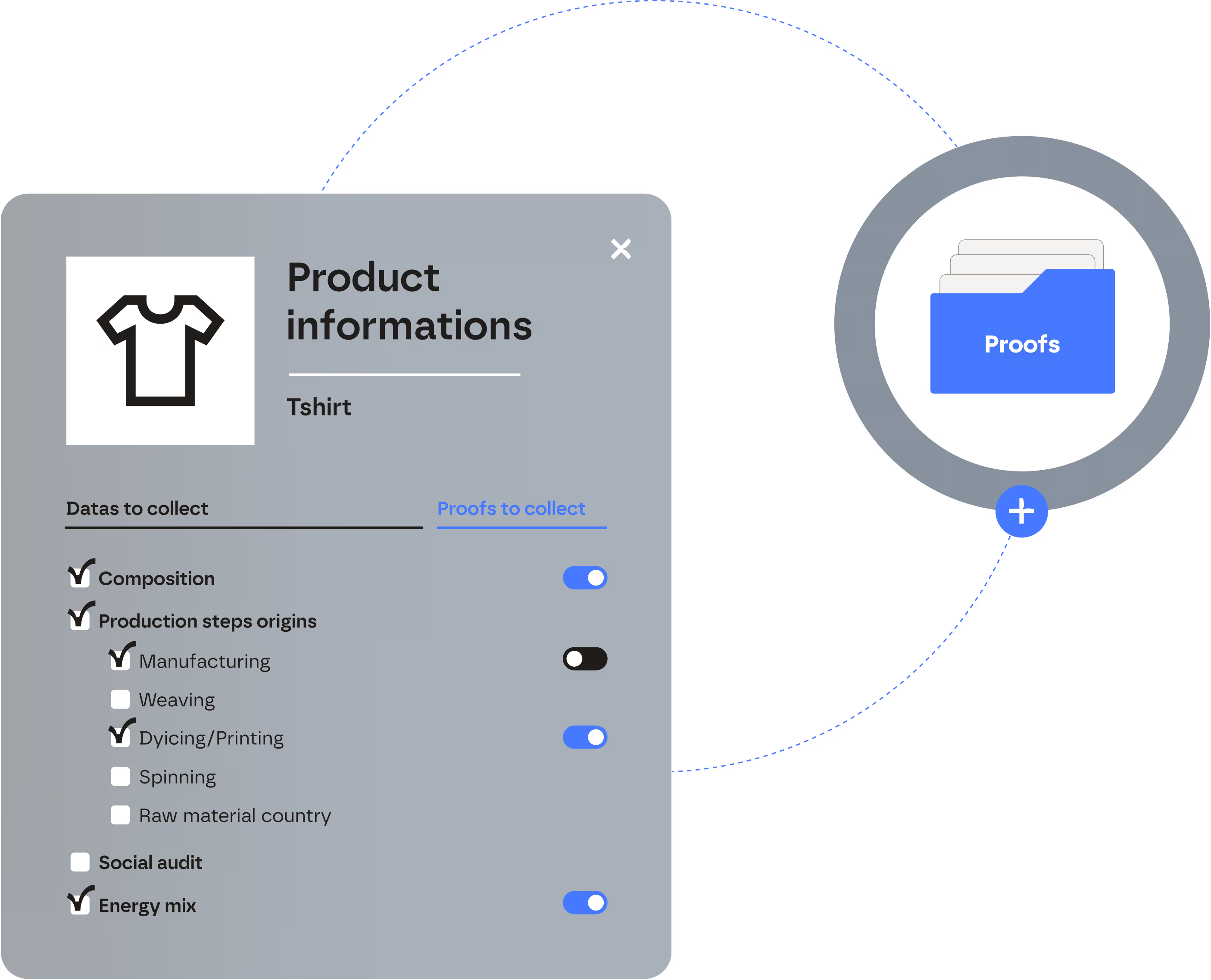
Trace For Good identifies EUDR-relevant products in your catalogue, based on their HS codes. For each product, the platform determines whether full plot-level traceability is required or whether a Due Diligence Statement (DDS) should be collected from the relevant supplier.
- Launch the appropriate campaign, either to collect plot-level data and supporting evidence or to request the relevant DDS from the supplier
- Link all collected information and documents directly to the relevant products
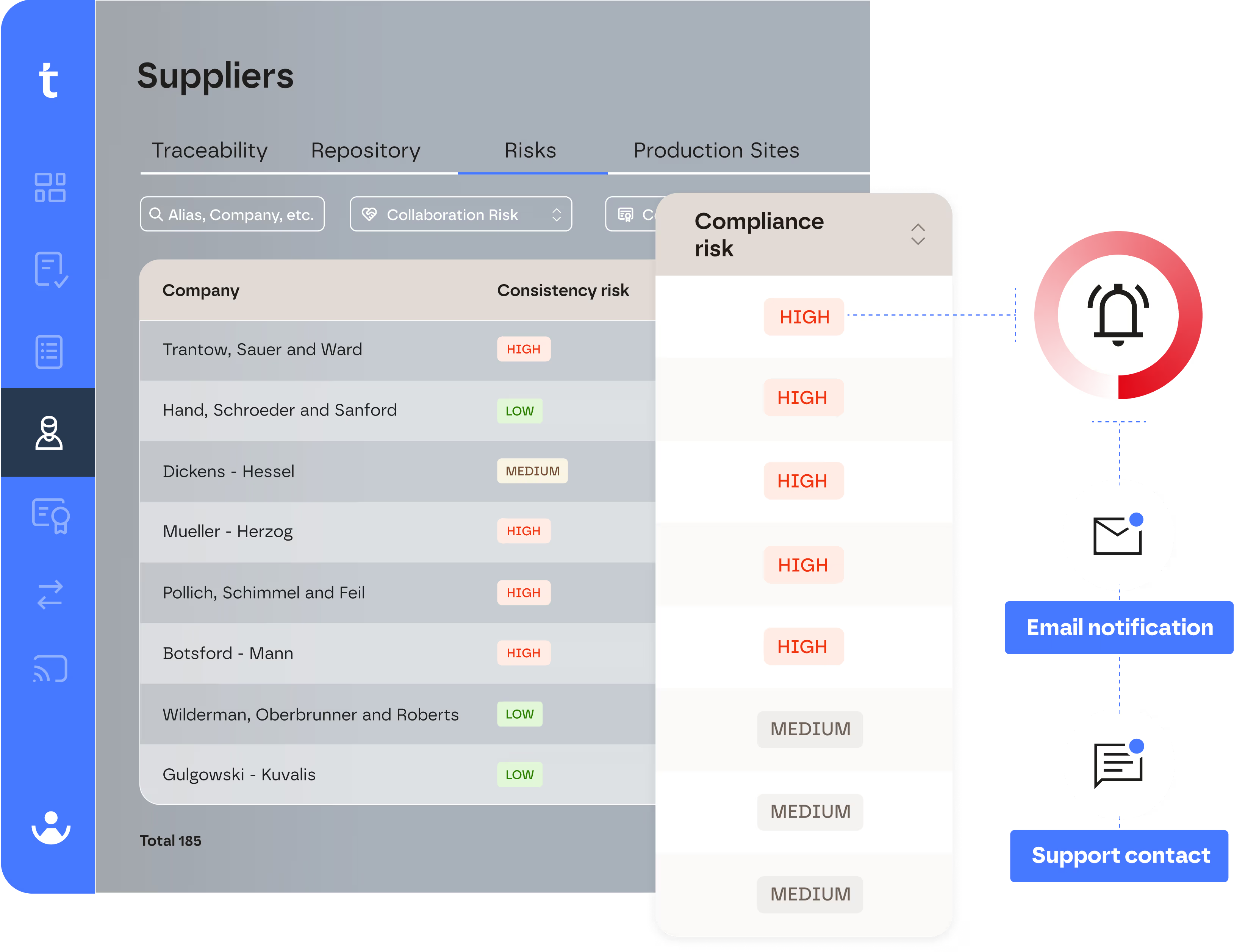
- Assess whether risk mitigation measures are required based on the production plot’s location and risk classification
Which products does it apply to?
The EUDR covers seven relevant commodities: cattle, cocoa, coffee, oil palm, rubber, soya and wood. It applies only to relevant products listed in Annex I under specific HS/CN codes. A product is not automatically in scope simply because it contains one of these commodities.
The scope was updated in July 2026 to exclude certain products, including:
- Printed materials under Chapter 49
- Recovered or recycled paper and certain packaging under Chapters 47 and 48
- Packaging used exclusively to support, protect or carry another product
- Cattle hides, skins and leather, subject to a scope review by 2030
- Conveyor belts and certain other vulcanised rubber articles
- Certain used or second-hand rubber and wood products
Other products have been added, including coffee extracts, essences and concentrates, certain oil-palm derivatives, and frozen cattle tongues. Some of these additions will apply from 30 December 2027.
To see the extensive list, click here: Regulation (EU) 2023/1115 on EUR-Lex
Trace For Good gives you a single workspace to collect, manage and verify the evidence required for EUDR due diligence:
- Collect supplier information and supporting documents through targeted requests
- Link plot-level geolocation data directly to the relevant products and materials
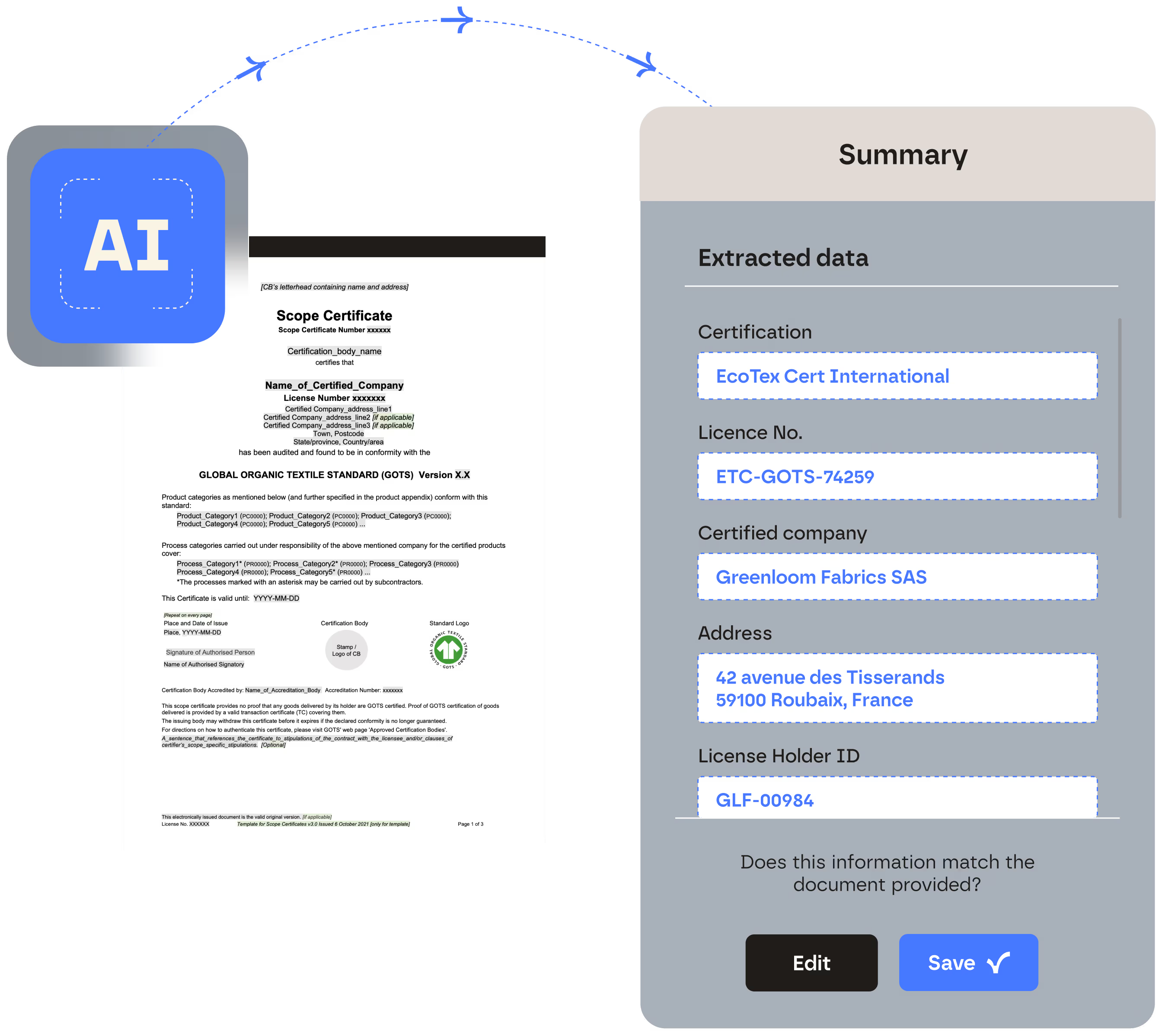
- Record proof of legality and regulatory responses in structured fields
- Monitor data completeness, identify gaps and follow up on missing evidence
- Maintain a complete, traceable record of the information used for risk assessment and mitigation
What are the EUDR requirements?
Operators must follow a three-step due diligence process before placing covered products on the EU market or exporting them from the EU:
- Collect and retain data about the product, quantity, country of production, production plots or cattle establishments, suppliers, supply chain and proof of legality
- Assess the risk of non-compliance, taking into account the country’s risk classification, supply chain complexity and other relevant risk indicators
- Mitigate identified risks to a negligible level by requesting additional information, conducting audits or taking other appropriate measures
Operators must then submit a due diligence statement electronically through the EU Information System and keep the statement, reference number and supporting evidence linked and retrievable.
Downstream operators and traders generally do not submit their own due diligence statements, but must retain the relevant DDS references and supply chain information. Non-compliant products cannot enter, be sold in or leave the EU market.
.avif)
EUDR: what changes for your brand
You must map every relevant product and material flow
All products and materials in your assortment that are linked to cattle, cocoa, coffee, palm oil, rubber, soy, wood, or their covered derivatives must be clearly identified.
You must identify your role in the supply chain
The responsibilities of an operator and a trader are different. A company that imports, manufactures, or exports a covered product may bear the full due diligence obligations, while a company that only sells the product within the EU must maintain the required traceability information.
You must collect production country and plot geolocation
Under the standard due diligence regime, this generally means collecting plot-level geolocation. Eligible micro and small primary operators may use a postal address under the simplified regime, while downstream operators and traders may rely on upstream DDS reference numbers or declaration identifiers.
You must demonstrate legality
The EUDR requires products to be legally produced in accordance with the relevant legislation of the country of harvest. Supplier declarations and supporting evidence should therefore be collected and linked to the relevant product flows.
You must assess and mitigate risk
Due diligence is not limited to collecting documents. Operators must assess risk based on factors such as country risk and supply chain complexity, then take additional measures when the risk cannot be reduced to a negligible level.
You must prepare the due diligence statement
Operators must submit a due diligence statement electronically via the EUDR Information System, TRACES. The supporting information should be structured and retrievable when needed.
Maîtriser vos produits,engagez vos fournisseurs,informez vos clients.
A simpler way to manage EUDR compliance
Identify products requiring EUDR compliance based on their HS codes and supply chain flows
Launch the appropriate campaign, either to collect plot-level data and supporting evidence or to request the relevant DDS from the supplier
Link regulatory information and supporting documents to each product and its supply chain
Generate structured evidence and due diligence statements
Track missing data, define risk-mitigation actions, and submit declarations through the EU Information System
Key featuresfor the EUDR
Useful ressourcesfor EUDR compliance
.png)






.jpg)

FAQ
What is the EUDR?
The EUDR is Regulation (EU) 2023/1115 on deforestation-free products. It prohibits the placing, making available, or export of certain commodities and derived products unless they are deforestation-free, legally produced, and covered by a due diligence statement.
Which products are covered by the EUDR?
The covered commodities are wood, cattle, cocoa, coffee, palm oil, rubber, and soybeans. The Regulation also applies to certain derived products that contain, have been fed with, or have been manufactured from these commodities. The applicable products are identified through HS and CN codes.
To view the full list of products covered by the RDUE, please refer to Annex I of the Regulation: Annex I of the EUDR
To view updates to the scope of products covered, click here: list of products excluded from the EUDR
Does the EUDR apply to leather?
No. Cattle hides, skins, and leather were removed from the EUDR product scope by Commission Delegated Regulation (EU) 2026/2102, which entered into force on 17 September 2026. Leather is therefore no longer covered by the EUDR from the applicable dates. Brands should nevertheless verify the final HS and CN classification of their products and monitor any future regulatory developments.
What is the difference between an operator and a trader?
An operator is generally the first entity to place a covered product on the EU market or export it from the EU, and must meet the full due diligence obligations.
A trader makes covered products available further down the supply chain and must maintain traceability information, with lighter obligations for some small and medium-sized companies.
What information must operators collect?
Operators must collect product description and quantity, country of production, relevant production-location information, supplier information, and proof of legality. Under the standard due diligence regime, this generally includes plot-level geolocation.
Eligible micro and small primary operators may use a postal address under the simplified regime, while downstream operators and traders may rely on upstream DDS reference numbers or declaration identifiers.
Operators must also document the risk assessment and any risk mitigation measures required to make the risk negligible.
What is a due diligence statement?
A due diligence statement is the declaration supporting the placing, making available, or export of a covered product under the EUDR. It must be submitted electronically via the EUDR Information System TRACES.
Do SME traders need to conduct full due diligence?
SME traders do not need to conduct full due diligence. They must maintain traceability by keeping information about the suppliers from whom they bought the products and the customers to whom they sold them. They must retain these records for five years.
When do the main EUDR obligations apply?
The main obligations apply from 30 December 2026 for medium and large companies, and from 30 June 2027 for micro and small companies.
Are there simplifications for low-risk countries?
Yes. Operators sourcing exclusively from countries classified as low-risk can skip the risk assessment and mitigation steps if they have checked for circumvention risks and no contrary information surfaces. This is referred to as simplified due diligence under Article 13.
Are recycled products covered by the EUDR?
Products made entirely from recycled or recovered material are fully exempt according to the source guidance. Derived products further down the chain may also benefit from transitional arrangements when the relevant commodities were placed on the market before the applicable deadline.
What happens if a product does not comply?
Products that do not meet the three EUDR conditions cannot be sold, imported, or exported within the market. Operators may need to request additional data, conduct audits, or change suppliers when the risk cannot be reduced to a negligible level.