The PPWR
From 12 August 2026, the PPWR requires fashion brands to identify, document and substantiate every packaging component placed on the EU market.
With Trace For Good, centralise packaging and supplier information, collect the documents you need and structure the evidence required to demonstrate compliance with the PPWR.

Understanding the PPWR
The Packaging and Packaging Waste Regulation (PPWR), Regulation (EU) 2025/40, is the EU’s new legal framework for packaging and packaging waste. It repeals Directive 94/62/EC and applies directly across the European Union.
The key change is that packaging is now treated as a regulated product in its own right, rather than merely as an accessory to the product it contains. As a result, packaging itself is subject to specific requirements throughout its life cycle, from design and manufacture to reuse, recycling and end-of-life management.
The PPWR introduces requirements on packaging minimisation, substances of concern, recyclability, recycled content, reuse, labelling, conformity assessment and the responsibilities of economic operators.
Trace For Good helps you prepare for PPWR requirements by enabling you to:
- Centralise product, supplier, and packaging information in one workspace;
- Launch targeted data collection campaigns with packaging suppliers;
- Collect declarations, certificates, test reports, and other supporting evidence;
- Structure regulatory data such as materials, recycled content, substances, and packaging characteristics;
- Track missing information and documentation across your supply chain;
- Keep reliable evidence available for internal reviews and market surveillance requests.
Prepare your packaging compliance process with structured, traceable data.
What are the objectives of the PPWR?
The PPWR aims to reduce the amount of packaging placed on the EU market and the waste it generates through seven key areas:
- Eliminating unnecessary packaging and excessive empty space;
- Improving packaging design to facilitate collection, sorting and recycling;
- Increasing the use of recycled content in plastic packaging;
- Promoting reuse and refill systems where appropriate;
- Harmonising packaging labelling and requirements across the European Union;
- Clarifying the responsibilities of manufacturers, importers, distributors and fulfilment service providers;
- Strengthening market surveillance to prevent non-compliant packaging from being placed on the market.
Which companies are affected by the PPWR?
The PPWR applies to economic operators involved in packaging placed on the European market, including:
- Packaging manufacturers
- Brands placing packaged products on the market under their own name or trademark
- Importers bringing packaged products into the European Union
- Distributors and retailers making packaged products available on the market
- Fulfilment service providers supporting e-commerce sales
The first step for any company is to determine its role under the PPWR. This role determines whether the company is subject to the Regulation and which obligations apply to it. A company may have several roles depending on the product, packaging format and supply chain.
For example, a fashion brand may act as the manufacturer of packaging placed on the market under its own brand, while acting as a distributor for products purchased from another.
Trace For Good helps you build and manage this inventory in one workspace:
- Centralise packaging information across products, suppliers and distribution flows
- Link each packaging component to the relevant product and supplier
- Identify missing information and overlooked packaging components
- Maintain a complete, traceable record of your packaging flows
Which types of packaging does it apply to?
The PPWR covers packaging placed on the European market, including:
- Sales packaging, such as polybags, shoe boxes, garment covers, dust bags, and product boxes
- Grouped packaging used to bundle several products together
- Transport packaging, such as cartons, pallets, and logistics packaging
- E-commerce packaging, including mailing bags and shipping boxes
- Service packaging, such as shopping bags and gift packaging
Fashion brands should consider every packaging component placed on the market, including packaging used online, in stores, between warehouses, or during distribution.
Because classification depends on how an item is used, packaging such as hangtags, dust bags, garment covers and shopping bags should be reviewed as part of a complete inventory.
Trace For Good helps you manage all your PPWR requirements in one workspace:
- Manage packaging as a product in its own right, while linking it to the relevant product references when needed for a clear view of your entire portfolio
- Collect all required information and documents directly from suppliers
- Extract key information with OCR to support a first validation by suppliers, followed by a second review by your teams
- Link every piece of information and document to the relevant packaging, product, component or material, depending on the level of detail required
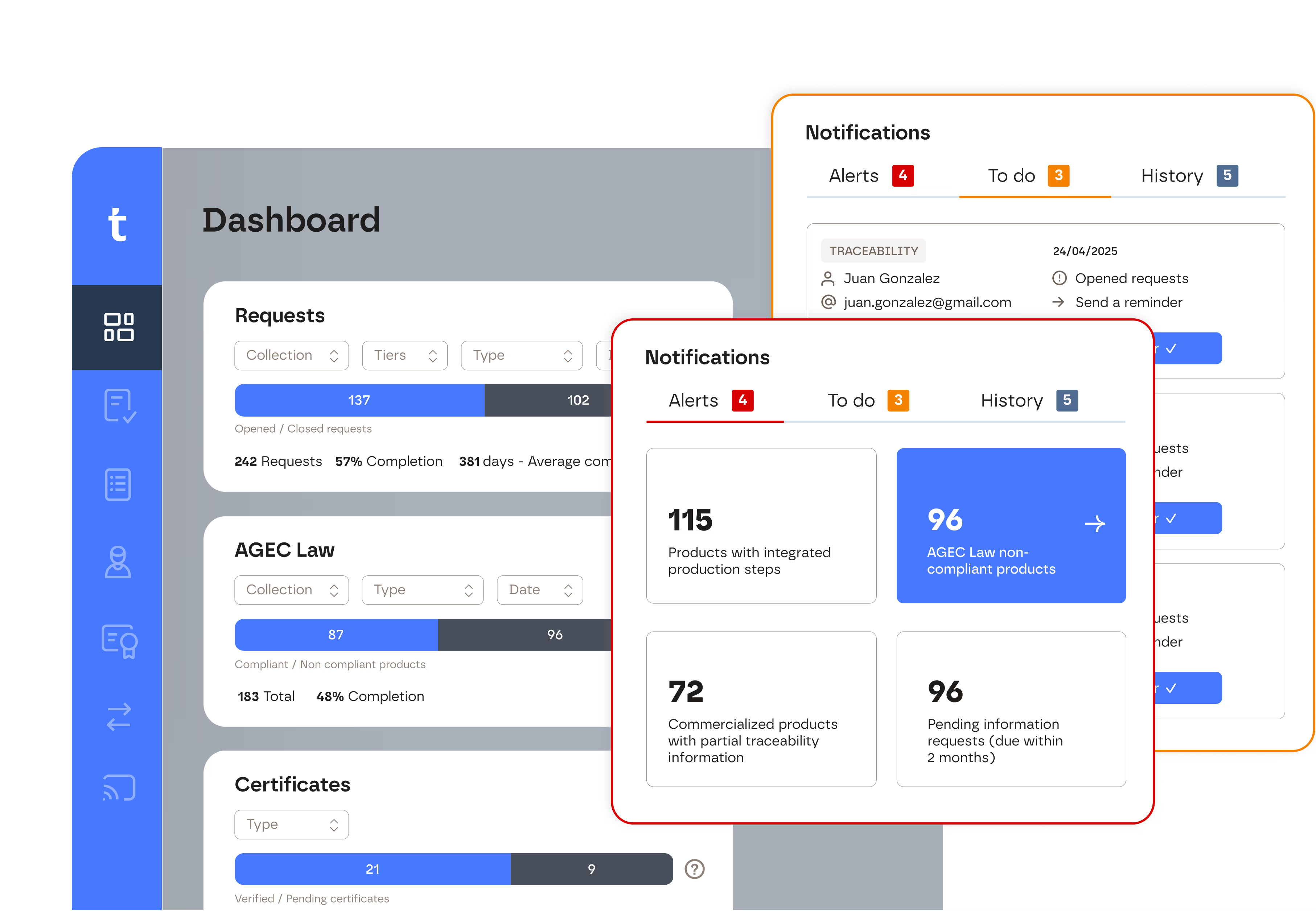
- Monitor data completeness and reliability, identify missing information and flag potentially incorrect data
- Store and track all data over time so the relevant evidence can be easily exported in the event of an inspection
What are the PPWR requirements?
The PPWR introduces requirements that will apply progressively. The main areas are:
- Packaging minimisation:
Packaging must use the minimum weight and volume needed to protect the product and fulfil its function. Grouped, transport and e-commerce packaging will generally be limited to a maximum empty-space ratio of 50%, subject to applicable exceptions. - Substances of concern:
Packaging must limit substances of concern. Brands should obtain supplier declarations covering applicable restrictions, including heavy metals and, where relevant, PFAS. - Recyclability:
From 2030, packaging will be assessed against harmonised Design for Recycling criteria and assigned a recyclability performance class. From 2035, it must also be recyclable at scale. - Recycled content:
From 2030, minimum recycled content targets will apply to certain plastic packaging, such as polybags, mailing bags, protective films and plastic transport packaging. - Reuse:
Reuse targets will mainly apply to transport and grouped packaging. For fashion brands, the main impact is likely to concern logistics and distribution packaging. - Harmonised labelling:
From 2028, harmonised EU labels will be introduced progressively for material identification, sorting instructions, reusable packaging and deposit return systems.

PPWR: what changes for your brand
You must map every packaging component
The first step is to identify the packaging placed on the European market, from primary packaging used on the product to grouped, transport, e-commerce, and service packaging.
You must identify your role in the supply chain
The responsibilities of a manufacturer, importer, distributor, or fulfilment service provider are different. A brand may hold several roles, so responsibilities should be mapped for each packaging flow.
You must collect evidence from suppliers
Packaging specifications, material composition, recycled content, certificates, test reports and declarations are often held by suppliers. Without this documentation, you cannot demonstrate that your packaging meets PPWR requirements, and it cannot be placed on the EU market.
You must prepare a technical compliance file
The PPWR requires compliance to be demonstrated, not simply stated. Brands need a documented process for assembling, updating, and retaining the technical evidence supporting each relevant packaging type.
You must be ready for market surveillance
Authorities may request documentation, require corrective actions, or order the suspension, withdrawal, or recall of non-compliant packaging or packaged products. The ability to retrieve reliable evidence quickly is therefore a core compliance requirement.
You must plan for progressive requirements
The PPWR is implemented in stages. Documentation and conformity obligations apply from 2026, followed by harmonised labelling, recyclability, recycled content, reuse, and recyclability-at-scale requirements over the following years.
Maîtriser vos produits,engagez vos fournisseurs,informez vos clients.
A simpler way to manage PPWR compliance
Manage packaging as a product in its own right, linked to your product references
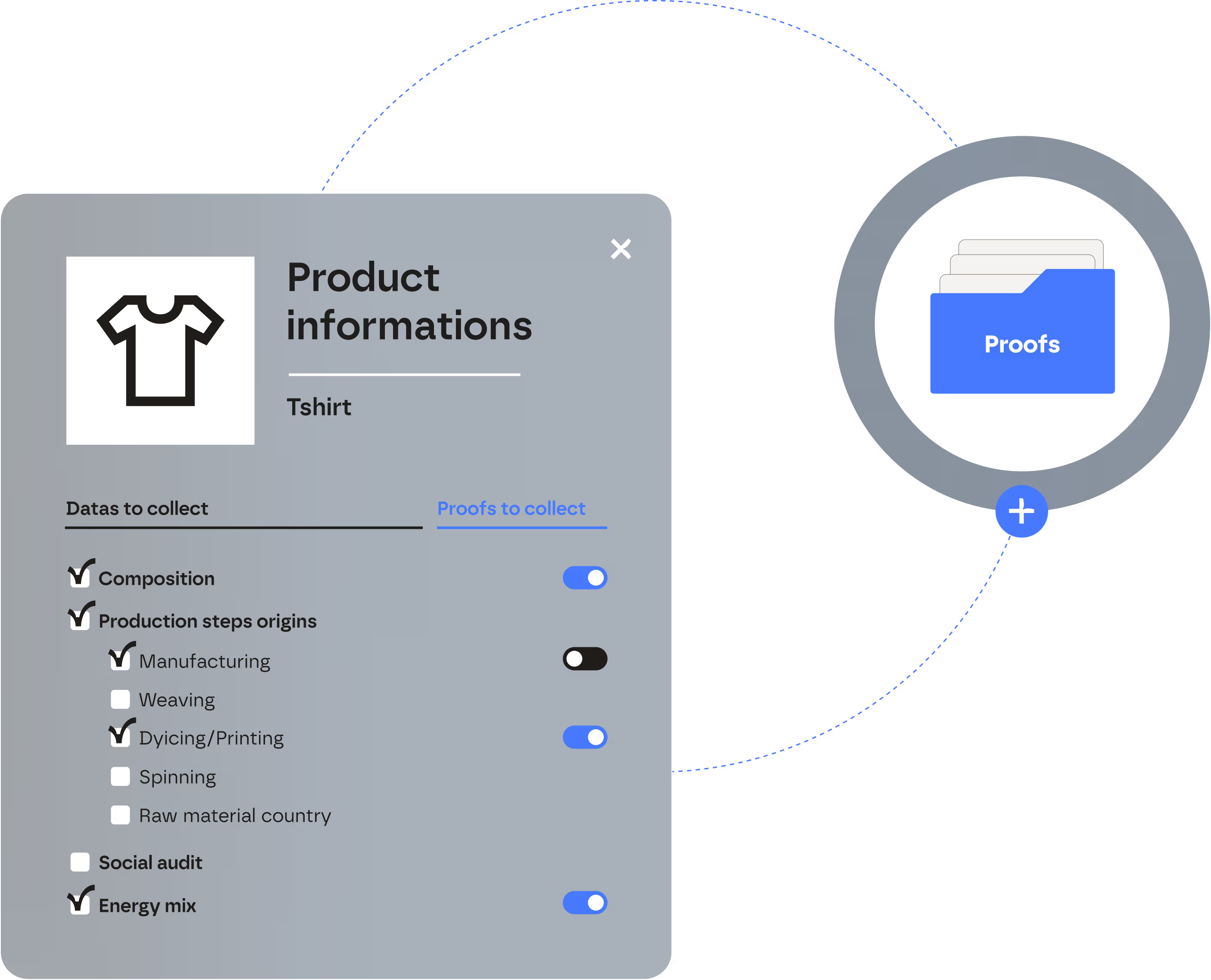
Collect required information and documents from suppliers
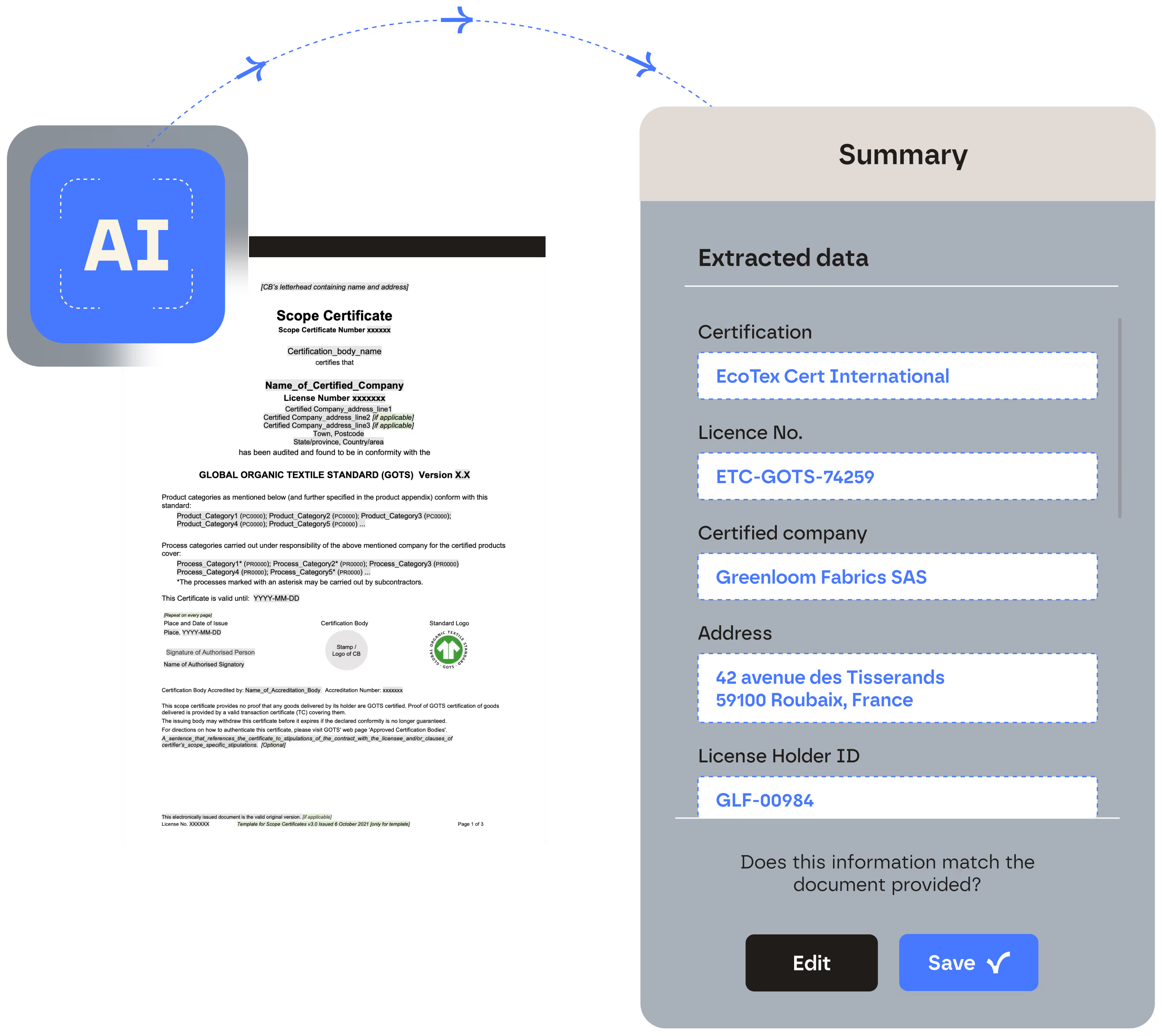
Extract key data with OCR for supplier and brand validation
Link data and documents to products, components and materials
Monitor data completeness, reliability and missing information
Store and track evidence for easy export during inspections
Key featuresfor the PPWR
Turn supplier documents into reliable data
Extract and connect your compliance data
Trace For Good uses OCR to extract key information from supplier documents and ensures its reliability through built-in controls. The data is then automatically linked to the relevant packaging references and their associated products.
Useful ressourcesfor PPWR compliance










FAQ
Is the PPWR already in force?
Yes. Regulation (EU) 2025/40 entered into force in 2025 and its main framework applies from 12 August 2026. It replaces the former Packaging and Packaging Waste Directive (PPWD) and applies directly across the European Union.
Does the PPWR replace national packaging rules?
The PPWR creates a harmonised European framework and replaces the former EU Packaging and Packaging Waste Directive. Some national requirements and Extended Producer Responsibility schemes may continue to apply where they are not harmonised by the Regulation. Brands should therefore review both the PPWR and the national rules applicable in each market.
Who is considered the manufacturer under the PPWR?
The manufacturer is not necessarily the company physically producing the packaging. In many cases, the brand placing packaged products on the market under its own name or trademark may be responsible for demonstrating compliance, even when the packaging is manufactured by a supplier.
What documentation must brands keep?
The required compliance file may include packaging identification, material specifications, design documentation, test reports, certificates, supplier declarations, calculations, conformity assessments, technical documentation, and an EU Declaration of Conformity. The exact evidence depends on the packaging type and applicable requirement.
Do I need to publish PPWR information on every product page?
No. Unlike the French AGEC requirements, the PPWR does not primarily require a consumer-facing product information sheet. Its core requirements concern packaging compliance, documentation, conformity assessment, and the ability to provide evidence during market surveillance. Other regulations, such as the future DPP, may still require information to be published to consumers.
When will the different PPWR requirements apply?
The main milestones are:
- 12 August 2026: PPWR becomes applicable and the first compliance framework applies;
- 12 February 2027: Member States must establish national penalty rules;
- 2028: Harmonised packaging and waste sorting labels;
- 2030: Design for Recycling, recycled content, and specific e-commerce packaging requirements;
- 2035: Recyclability at scale;
- 2038: Higher recyclability performance requirements;
- 2040: Further long-term waste prevention, reuse, and circularity targets.
What happens if a company does not comply?
National authorities may request technical documentation, require corrective actions, or order a company to stop placing packaging on the market. Depending on the situation, measures may include completing documentation, correcting the packaging, withdrawing products, recalling products already supplied, or imposing national administrative fines. Penalties must be effective, proportionate, and dissuasive.
What data and evidence must be available?
The PPWR introduces a product compliance framework for packaging. Depending on the packaging type and applicable requirements, the compliance file may include:
- Packaging identification, reference, version, and photographs;
- Description of the packaging, its function, category, and components;
- Material composition, weight, supplier, and recycled content;
- Material specifications and design documentation;
- Test reports and conformity assessments;
- Certificates such as FSC, PEFC, ISCC, or RecyClass, where relevant;
- Calculations supporting compliance, including weight, empty space, or recycled content;
- Supplier declarations covering composition, substances, PFAS, heavy metals, or other applicable requirements;
- Technical documentation demonstrating compliance with the Regulation;
- An EU Declaration of Conformity signed by the responsible manufacturer.
Technical documentation and the EU Declaration of Conformity must be kept up to date and made available to market surveillance authorities when requested. The retention period is generally five years for single-use packaging and ten years for reusable packaging.
Can PPWR data be collected alongside AGEC, DPP, and other regulations?
Yes. Packaging composition, suppliers, materials, recycled content, certificates, and traceability information may be reused across several regulatory processes. However, PPWR compliance requires packaging-level evidence and technical documentation, which is distinct from the consumer-facing information required by AGEC or the future data structure of a Digital Product Passport.
How should we prepare for the PPWR now?
Start by mapping every packaging component placed on the European market, identifying your role for each packaging flow, and requesting the relevant specifications and declarations from suppliers. Then structure the information, identify missing evidence, and establish a process for keeping technical documentation and declarations up to date.